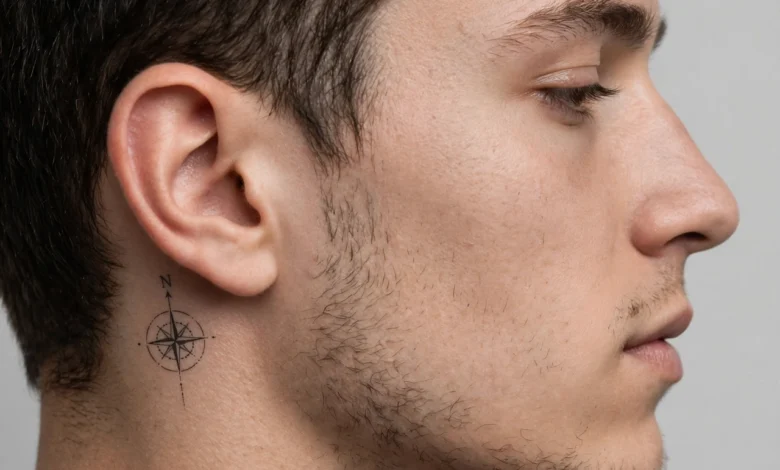
Behind the ear tattoos men are choosing right now are small, discreet and surprisingly expressive, and the short answer to the question most men ask first is yes, this placement works brilliantly if you want a tattoo that is easy to hide at work and easy to show off when you want to. The spot behind the ear is one of the most popular places for a first tattoo because the canvas is small, the designs are usually simple, and the whole session is often over quickly, yet the result can still carry real personal meaning. In this guide, we will walk through the best designs for men, what the pain honestly feels like, how healing and aftercare work, how to pick a safe studio, and what affects the price, so you can book your appointment with confidence rather than guesswork.

Before you fall in love with a design on social media, it is worth understanding why this particular placement has become such a favourite and what makes it different from a tattoo on your arm, chest or leg. The area behind the ear is curved, bony and close to your hairline, which means that not every design works there, and the artist’s skill matters more than the size of the tattoo suggests. A good behind the ear tattoo should sit naturally in the space, follow the shape of your ear, and still look clean and sharp years later, which is why the planning stage matters just as much as the tattooing itself. The rest of this article covers each of those decisions in detail, from choosing a design that suits the space to looking after the tattoo while it heals.
What Makes Behind the Ear Tattoos So Popular With Men?
One of the biggest reasons behind the ear tattoos men get are so popular is that they offer the best of both worlds, because the tattoo is visible when your hair is short or tied back and almost completely hidden when your hair grows over it or when you need a clean look for work. That flexibility matters a great deal to men who like tattoos but work in offices, customer-facing roles or industries with strict appearance policies, and it also appeals to men who simply prefer subtle body art over large, attention-grabbing pieces. The placement feels personal rather than performative, like something you chose for yourself rather than something designed to impress strangers, and that quiet confidence is a large part of its appeal as of November 2026.
There is also a practical side to the popularity, because a small tattoo behind the ear is usually finished in a single short session, which makes it an ideal first tattoo for someone who has never been under the needle before. You do not need to commit a whole afternoon or a large budget to try tattooing, and you can find out how your skin reacts and how you feel about permanent ink without the pressure of a big piece. Many men also like that the area is easy to care for during healing, since it is not rubbed by tight clothing the way a chest or hip tattoo can be, although you do need to be careful with headphones, hats and hair products for the first couple of weeks. All of these factors together explain why tattoo artists report this spot as one of the most requested placements for men.
Best Behind the Ear Tattoo Designs for Men
The best behind the ear tattoo designs for men are usually small, bold and simple, because fine detail gets lost in such a tiny space and the skin behind the ear moves and creases more than people expect. Classic choices include small symbols such as a compass, an anchor, a lightning bolt, a cross, a star or a simple geometric shape, all of which read clearly at a small size and age well because their lines are strong. Nature-inspired designs are also popular, including a small leaf, a mountain outline, a wave, a feather or a minimalist animal silhouette, while music lovers often choose a tiny music note, a sound wave or the logo of a band that means something to them. Word and number tattoos work too, such as a short word, initials or a meaningful date in a clean typeface, although your artist should warn you that very small lettering can blur over time.
When you are choosing your own design, it helps to think about the shape of the space rather than copying a picture exactly, because a design that looks perfect on someone else’s ear may not fit yours in quite the same way. Talk to your artist about scaling the design to your ear, and ask to see it placed as a stencil before any needle touches your skin so you can check how it looks from the front, the side and the back. Black ink is the safest and most popular choice for this spot because it stays crisp for longest, although some men add a small touch of colour for a personal accent, and that can work well if the colour is kept simple. Whatever you choose, remember that behind the ear tattoos men are happiest with tend to be the ones that mean something personal, so pick a design you will still like in ten years rather than one that is simply fashionable this month.
How Painful Is a Behind the Ear Tattoo?
Pain is the question almost every man asks before booking a behind the ear tattoo, and the honest answer is that it does hurt more than a tattoo on a fleshy area such as the upper arm, but most people describe it as uncomfortable rather than unbearable. The skin behind the ear is thin, there is very little fat to cushion the needle, and the bone and cartilage underneath sit close to the surface, which means you feel the vibration of the machine more sharply than you would elsewhere. Many people also notice a strange buzzing sensation because the needle is working close to the ear itself, and that sound and vibration can be more unsettling than the actual pain, especially if you are already nervous about your first tattoo.
The good news is that the pain does not last long, because most behind the ear tattoos are small and a skilled artist can finish a simple design in well under an hour, often in twenty to thirty minutes for a minimalist piece. Pain is also very personal, and factors such as how well you slept the night before, whether you have eaten, and how relaxed you are in the chair all make a real difference to how the session feels. Your artist can take short breaks if you need them, and there is no shame in asking for one, so go into the appointment rested, fed and hydrated, and try to keep your breathing slow and steady. If you are worried, talk to the artist beforehand, because a good artist will explain exactly what to expect and will never rush you into the chair before you are ready.
Behind the Ear Tattoo Healing and Aftercare
Healing a tattoo behind the ear is usually straightforward, but it does need your attention for the first two weeks, because this is the stage when infection and fading are most likely if the tattoo is neglected. In the first few days the area will feel tender and may look slightly red or swollen, which is a normal part of the healing process, and a thin layer of scabbing or flaking will often follow as the skin repairs itself. Your artist will cover the fresh tattoo with a protective dressing and will give you written aftercare instructions, and those instructions matter more than anything you read online, because they are specific to the way your artist works and the products they recommend. Follow them carefully, keep the area clean with gentle washing, and do not pick at any scabs, because pulling them off can pull ink out with them.
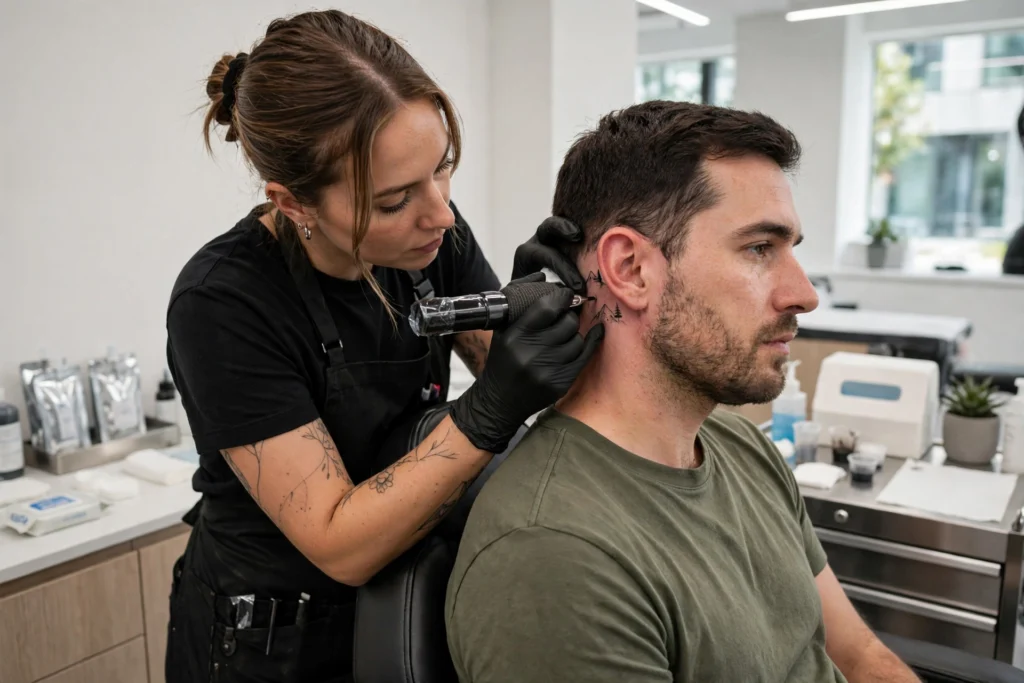
The most common aftercare mistakes are easy to avoid once you know about them, and the first is getting the fresh tattoo wet in ways that soak it, such as swimming, baths or saunas, all of which should be avoided until the skin has fully healed. You should also keep headphones, earbuds, hats and hair products away from the area for the first couple of weeks, because friction and chemicals can irritate the healing skin and introduce bacteria, and you should avoid direct sunlight on the new tattoo for the same reason. Health guidance from University College London Hospitals NHS Foundation Trust advises that signs of infection, such as spreading redness, swelling, pus or a fever, should be checked by a GP promptly, and that serious signs such as a very red or swollen area or a fever need urgent care if a GP cannot be seen within a day. That advice applies to any tattoo, and it is worth taking seriously, because a small problem caught early is far easier to treat than an infection that has been ignored for a week.
Choosing the Right Tattoo Studio and Artist
Choosing the right studio matters more than choosing the design, because a talented artist in a clean, professional studio is the single biggest factor in whether your tattoo looks good and heals safely. Start by looking at the artist’s portfolio, and pay attention to their healed work rather than only fresh photos, because a tattoo that looks sharp on the day can blur or fade badly if the lines were not laid down well. Ask friends for recommendations, read recent reviews, and visit the studio in person before you book, because a short visit tells you a great deal about how the place is run. The studio should be visibly clean, the artist should open fresh, single-use needles in front of you, and they should be happy to answer questions about hygiene, ink and aftercare without getting defensive.
In England and Wales, tattoo studios must be registered with their local authority, so it is reasonable to ask a studio about its registration and to check that it holds the proper local licensing for tattooing. A reputable studio will also ask you about your health, allergies and any medication you take, and it will not tattoo you if you are under the influence of alcohol or drugs, because both affect your skin and your ability to give proper consent. Be wary of any studio that offers a suspiciously cheap price, pressures you to decide on the spot, or cannot show you healed examples of its work, because those are all warning signs. A good artist will discuss your design honestly, tell you if an idea will not work at that size, and suggest changes that make the tattoo better, and that honesty is exactly what you want from someone putting permanent ink on your skin.
How to Make Your Behind the Ear Tattoo Last
A behind the ear tattoo lives in a spot that faces more wear than most people realise, because it is exposed to sunlight, rubbed by collars and headphones, and washed whenever you wash your hair, and all of those small daily contacts add up over the years. The single best thing you can do for its long-term appearance is to protect it from the sun once it has healed, because ultraviolet light breaks down tattoo pigment faster than almost anything else, and a tattoo behind the ear is easy to forget when you are applying sunscreen. Use a good sun cream on the area whenever you are outdoors for a long time, and consider that hats and hair cover can also help, although sunscreen is the more reliable habit. Keeping the skin moisturised also helps the tattoo look fresh, because healthy, hydrated skin shows ink more clearly than dry, flaking skin.
It is also worth knowing that some fading is normal, even with excellent care, because the skin behind the ear is thin and active, and small tattoos with fine lines naturally soften over time. That does not mean the tattoo is ruined, and it does not mean your artist did a bad job, because most tattoos need a touch-up at some point if you want them to stay crisp for decades. Many studios offer a free or low-cost touch-up within the first year, so ask about that policy when you book, and keep your artist’s details so you can return to the same person later. If you notice significant fading or blurring after a few years, a short touch-up session can restore the lines and bring the design back to life, and that is a normal part of owning a tattoo rather than a sign of failure.
How Much Does a Behind the Ear Tattoo Cost?
The cost of a behind the ear tattoo varies widely, and it depends far more on the studio, the artist’s experience and the complexity of the design than on the size of the tattoo itself. Most professional studios have a minimum charge that covers their time, sterile equipment and set-up, and a small behind the ear tattoo will often fall close to that minimum, while a more detailed or custom design will cost more because it takes longer to draw and to tattoo. Prices also differ between cities and regions, with studios in London and other large cities generally charging more than studios in smaller towns, and a well-known artist with a long waiting list will usually charge more than a newer artist building a portfolio. Because of all these differences, it is impossible to give a single reliable price, and any website that quotes an exact figure for every tattoo should be treated with caution.
The sensible approach is to contact two or three studios, explain your design idea, and ask for a quote before you commit to anything, because a proper quote takes your design and your skin into account rather than guessing. When you compare quotes, do not simply pick the cheapest option, because a low price can mean a less experienced artist, cheaper ink or a studio cutting corners on hygiene, and none of those are worth saving money on. Ask what the quote includes, whether a touch-up is part of the deal, and whether there is a deposit, because most studios take a deposit to secure your appointment and that deposit is usually non-refundable if you cancel at short notice. A fair price from a clean studio with a skilled artist is an investment in something that stays on your body for life, so treat the decision that way.
Conclusion
Behind the ear tattoos men choose are a smart, stylish option when you want a tattoo that is small, personal and easy to live with, and the key to a great result is planning rather than impulse. Choose a simple design that fits the shape of the space, pick a clean and properly registered studio with an artist whose healed work you admire, and go into the appointment rested and prepared so the short session feels manageable. The pain is real but brief, the healing takes about two weeks of sensible care, and the result can be a piece of body art that you enjoy for many years.
If you take one thing from this guide, let it be that the artist matters more than the design, because the best idea in the world will not look good in the hands of the wrong person, while a good artist can turn a simple idea into something you love. Do your research, ask questions, follow the aftercare instructions you are given, and protect the finished tattoo from the sun, and your behind the ear tattoo will reward you with a clean, sharp look that stays with you. When you are ready, book a consultation, take your design ideas with you, and enjoy the process, because getting a tattoo should be an experience you remember fondly, not something you rush through and regret.
Are behind the ear tattoos men get very painful?
Behind the ear tattoos do hurt more than tattoos on fleshier areas, because the skin is thin and the bone sits close to the surface, so most people rate the pain as moderate rather than mild. The vibration of the machine near the ear can also feel strange, and some people find that buzzing sensation more distracting than the needle itself. However, the pain is short-lived, because most behind the ear designs are small and take well under an hour to complete, and many men are surprised by how quickly the session is over once it begins.
Your experience will also depend on your own preparation, because being tired, hungry or stressed can make any tattoo feel worse than it needs to. Eat a proper meal beforehand, sleep well the night before, and tell your artist if you need a short break during the session, because there is no rush and a good artist would rather pause than have you tense up. If you have never had a tattoo before, this placement is a reasonable first choice precisely because the session is short, even though the spot itself is more sensitive than an arm or a leg.
How long does a behind the ear tattoo take to heal?
A behind the ear tattoo usually takes around two weeks for the surface of the skin to heal, although the deeper layers can take a little longer to settle fully, and your artist will give you a healing timeline based on your skin and the design. In the first few days you can expect tenderness, mild redness and some flaking or light scabbing, all of which are normal signs that the skin is repairing itself. You should follow your artist’s aftercare sheet carefully during this period, keep the area clean, and avoid picking at any scabs, because that can pull ink out and leave patchy areas.
Full healing means you can return to normal activities such as swimming, saunas and direct sun exposure, but you should wait until the skin looks and feels completely normal before doing any of those things. If redness spreads, the area becomes hot and swollen, you notice pus, or you develop a fever, seek medical advice promptly, as University College London Hospitals NHS Foundation Trust advises, because those can be signs of infection that need treatment. Most tattoos heal without any problems at all when the aftercare instructions are followed properly.
What are the most popular behind the ear tattoos men ask for?
The most popular behind the ear tattoos men ask for are small, bold and simple designs, because the space is tiny and fine detail does not survive well there over time. Compass designs, anchors, lightning bolts, stars, crosses and small geometric shapes are among the most requested, along with nature motifs such as a small leaf, a mountain outline or a wave. Music notes, sound waves, initials, short words and meaningful dates are also common, and many men choose a design that represents a personal value, a memory or a person who matters to them.
Black ink is the most popular choice for this placement, because it stays crisp for the longest and reads clearly at a small size, although some men add a small touch of colour for a personal accent. When you choose your design, it is worth asking your artist whether the idea will work at the size you want, because a good artist will be honest if a design is too detailed for the space. A simpler design that heals cleanly will always look better in five years than a complicated one that blurs, so let your artist guide you on scale and detail.
Can I hide a behind the ear tattoo for work?
Yes, a behind the ear tattoo is one of the easiest tattoos to hide, which is a large part of why so many men choose this placement when they work in offices or customer-facing roles. If your hair is long enough to cover the area, the tattoo will be hidden naturally, and even with short hair it is barely noticeable from the front, because it sits behind the ear rather than on the face or neck. That makes it a practical choice for men who want a tattoo but need to keep a clean, professional appearance during working hours.
That said, you should still check your employer’s appearance policy before getting tattooed, because rules differ between workplaces and some employers have specific policies about visible tattoos. It is also worth remembering that hiding a fresh tattoo under long hair or a hat during healing is not ideal, because friction and trapped moisture can irritate the skin. Plan your appointment for a time when you can give the tattoo a couple of weeks of easy care, and if you are unsure about workplace rules, ask your employer directly before you book.
Do behind the ear tattoos fade faster than other tattoos?
Behind the ear tattoos can fade a little faster than tattoos on less exposed areas, because the skin there is thin, the area is washed often, and it is exposed to sunlight and friction from headphones, hats and collars. That does not mean the tattoo will disappear, and with good care most behind the ear tattoos stay looking sharp for many years, but it is realistic to expect some softening of fine lines over time. Sun protection is the most important habit, because ultraviolet light is the biggest cause of fading for any tattoo, and this spot is easy to forget when applying sunscreen.
Choosing a simple, bold design with strong lines also helps, because bold lines hold up far better than very fine detail or pale colours in a small space. Your artist can advise you on which designs age best, and many studios offer a touch-up if the tattoo fades noticeably, so ask about that when you book. With sensible aftercare, sun protection and an occasional touch-up, a behind the ear tattoo can look good for decades, and fading should be seen as a normal part of owning a tattoo rather than a problem.