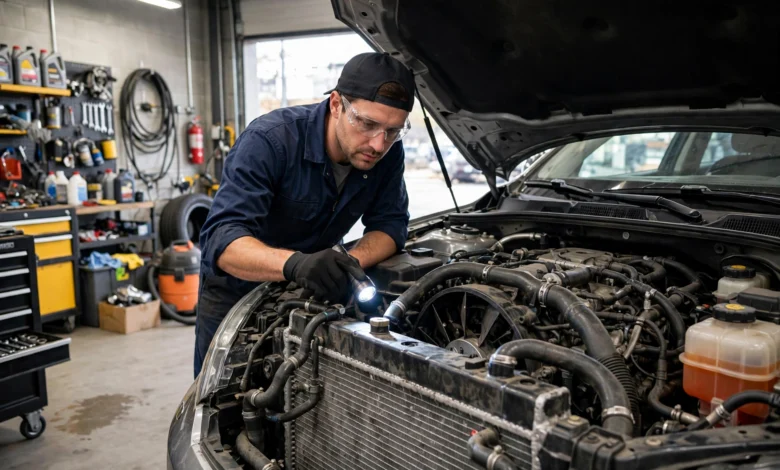
A radiator repair near me is the search you make when your car is overheating, leaking coolant or showing a temperature warning, and the short answer is that you need a garage that can pressure-test the cooling system, find the leak properly, and give you a written quote before any work starts. The radiator is the heart of your car’s cooling system, because it takes hot coolant from the engine, cools it down with airflow, and sends it back to absorb more heat, and when it fails, the engine can overheat in minutes. In this guide, we explain the warning signs of radiator trouble, whether it is safe to keep driving, how to find a good repair garage near you, what the repair itself involves, and how to prevent the problem from coming back.
Radiator problems are more common than many drivers realise, particularly on older cars and on vehicles that have missed coolant changes, and they rarely fix themselves, so the sooner you act, the smaller the bill is likely to be. A small leak caught early might mean a hose or a clamp, while the same leak ignored for weeks can mean a ruined radiator, a warped cylinder head or a dead engine, and the difference between those two outcomes is often just a few days of driving. That is why this guide focuses on recognition and quick action, so you know exactly what to look for and what to do the moment something seems wrong.
What Is a Radiator Repair and When Do You Need One?
A radiator repair is any work carried out to restore your car’s cooling system to proper working order, and it can range from a simple fix, such as replacing a split hose or a faulty radiator cap, to a full radiator replacement when the core itself is damaged beyond repair. The radiator sits at the front of the car, behind the grille, where air flows through it as you drive, and inside it, a network of thin tubes and fins carries hot coolant from the engine and sheds that heat into the air. Over time, those tubes can corrode, the fins can clog with dirt and debris, the plastic end tanks can crack, and the joints can start to weep coolant, and any of those faults will reduce the radiator’s ability to keep the engine at a safe temperature.
You need a radiator repair when any part of that system stops doing its job, and the trigger is usually a symptom rather than a date in a service book, because radiators do not have a fixed replacement interval the way a timing belt does. The most common triggers are a visible coolant leak, the temperature gauge climbing higher than usual, the dashboard temperature warning light coming on, or the heater inside the car blowing cold air when it should be warm. A garage will normally diagnose the problem with a visual inspection, a pressure test of the cooling system, and a check of the coolant level and condition, and those tests will show whether the radiator itself is at fault or whether the problem lies elsewhere, such as the water pump, the thermostat or a hose. Getting that diagnosis right matters, because replacing a radiator will not fix an overheating problem caused by a failed thermostat.
Warning Signs Your Car Radiator Needs Repair
The earliest warning sign of radiator trouble is often a puddle under the front of the car, and the colour of the fluid is a useful clue, because coolant is usually bright green, pink, orange or blue, and it feels slightly slippery and smells faintly sweet. If you see that kind of puddle regularly under your car, do not simply top up the coolant and carry on, because the leak will get worse and the coolant level will keep dropping until the engine starts to overheat. Another early sign is needing to top up the coolant more often than usual, because a healthy cooling system is sealed and should not lose fluid, so a falling level always means something is escaping somewhere. The temperature gauge is your next warning, and if it climbs higher than its normal position, or moves up and down unpredictably, the cooling system is struggling and needs checking.
Other signs are easy to miss but just as important, and they include a sweet smell inside or around the car, which often means coolant is leaking onto a hot engine part and evaporating, and visible steam or white smoke from under the bonnet, which is a serious sign that should never be ignored. The heater blowing cold air when the engine is warm can also point to low coolant or a blocked radiator, because the heater uses the same hot coolant to warm the cabin. You may also notice rust-coloured or sludgy coolant when you check the reservoir, which suggests corrosion inside the system, or a radiator that looks damaged, bent or clogged with debris from the outside. If your car develops a burning or unusual smell alongside any of these signs, our guide to why a car smells like petrol explains how to think about car smells and when to seek help promptly, because smells from the engine bay should always be investigated rather than ignored. If several of these signs appear together, do not wait for the next service, because the fault is already affecting the engine.
Can You Drive With a Damaged Radiator?
The honest answer to whether you can drive with a damaged radiator is that it depends on how bad the damage is, but in most cases the safe choice is to stop driving and get the car checked as soon as you can. A tiny, slow leak might let you drive a short distance to a nearby garage if you keep a close eye on the temperature gauge and top up the coolant first, but that is a calculated risk rather than a proper solution, and it should only be done if the gauge stays in its normal range and the leak is genuinely small. If the temperature gauge is climbing, the warning light is on, steam is coming from the bonnet, or coolant is pouring out, do not keep driving, because an overheated engine can suffer serious damage in a matter of minutes, including a blown head gasket or a warped cylinder head, and those repairs cost far more than a radiator.
If you find yourself in this situation on the road, pull over somewhere safe, switch the engine off, and let it cool down completely before you even think about opening the bonnet or touching the coolant cap, because the system is under pressure and the coolant is scalding hot. The RAC’s motoring advice on car overheating explains that you should never remove the coolant cap on a hot engine, and that you should allow the engine to cool before checking the coolant level. Once the engine is cool, you can check the coolant reservoir, top it up with the correct coolant if you have it, and drive slowly to the nearest garage while watching the gauge, or call for breakdown cover if the leak is heavy or the temperature rises again. Breakdown cover exists for exactly this situation, and using it is far cheaper than paying for an engine rebuild, so do not let embarrassment about calling for help push you into driving a car that is clearly overheating.
How to Find a Radiator Repair Garage Near You
Finding a good radiator repair near me starts with looking for a garage that does cooling system work regularly, rather than simply picking the nearest workshop, because proper diagnosis needs pressure-testing equipment and experience with cooling faults. Search for garages that mention radiator repair, cooling system work or overheating diagnosis, and read their reviews carefully, looking for customers who describe the same problem you have and say the garage fixed it properly. A garage with recent, detailed reviews about cooling work is a better sign than a high star rating with no detail, and recommendations from friends, family or local motoring groups are valuable too, because a personal recommendation usually comes with honest detail about price and service.
When you contact a garage, describe the symptoms clearly, including any leaks, smells, warning lights or temperature readings, and ask what diagnostic checks they will carry out before quoting, because a good garage will pressure-test the system and inspect the radiator, hoses, thermostat and water pump rather than simply guessing. Ask for a written estimate that separates parts and labour, ask whether the quote includes VAT, and ask whether they will use a new, reconditioned or pattern radiator, because those options differ in price and warranty. You should also ask how long the job will take, what warranty they offer on the repair, and whether they will call you before doing any extra work they discover. A garage that answers these questions willingly and puts its quote in writing is usually one you can trust, and a garage that will not do either of those things is one to avoid.
What Happens During a Radiator Repair?
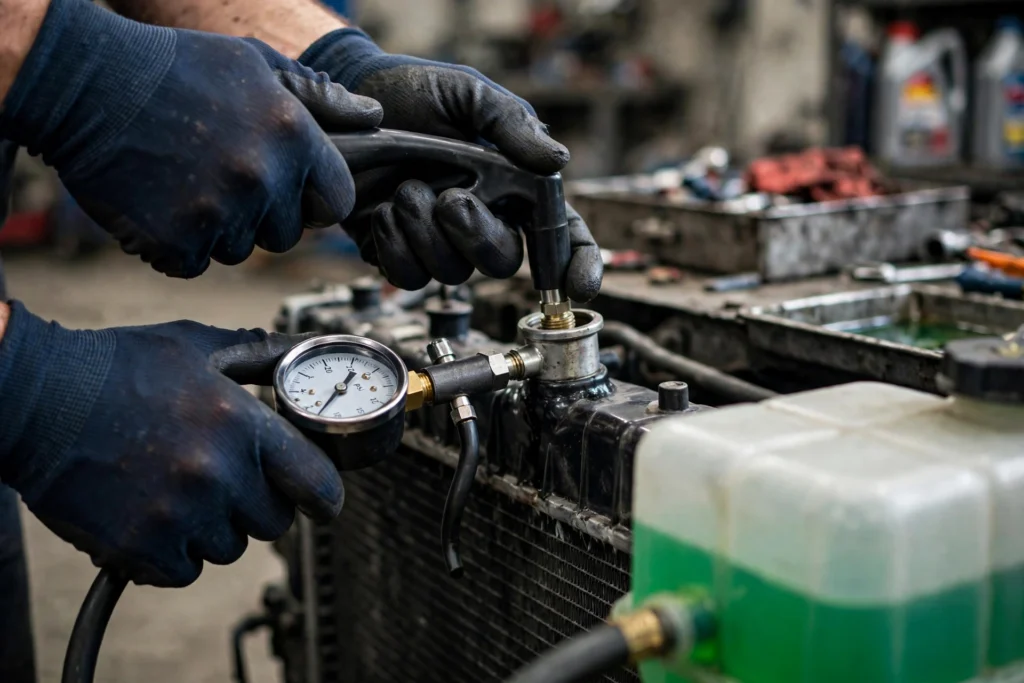
A proper radiator repair always starts with diagnosis, because the mechanic needs to know exactly where the cooling system is failing before replacing anything, and skipping that step is how drivers end up paying for a new radiator when the real fault was a ten-pound hose. The garage will usually start with a visual inspection of the radiator, hoses, clamps, water pump and reservoir, looking for leaks, corrosion, damage and perished rubber, and then carry out a pressure test, which involves pressurising the cooling system and watching for drops in pressure or visible leaks. They may also test the coolant itself, checking its colour, its condition and its concentration, because old or contaminated coolant can cause corrosion that damages the radiator from the inside, and they will check the thermostat and the cooling fan to make sure those are working as they should.
Once the fault is found, the repair itself depends on what is wrong, and a radiator repair near me can mean several different jobs depending on the diagnosis. A split hose, a failed clamp or a faulty radiator cap is a quick and inexpensive fix, while a leaking radiator may be repairable if the damage is small and in an accessible spot, although many modern radiators with plastic end tanks cannot be repaired reliably and need replacing. A full radiator replacement involves draining the coolant, removing the old radiator, fitting the new one, refilling the system with the correct coolant, bleeding out trapped air, and then running the engine to check for leaks and confirm the temperature stays normal. A good garage will also check the rest of the cooling system while the radiator is out, because it makes sense to replace worn hoses or a tired thermostat at the same time rather than paying for the same labour twice.
How to Prevent Radiator Problems in the Future
Preventing radiator problems is mostly about simple, regular maintenance, and the most important habit is checking your coolant level every few weeks and keeping it topped up with the correct coolant for your car. The coolant does more than stop the engine from freezing in winter, because it also raises the boiling point, prevents corrosion inside the cooling system, and lubricates the water pump, and using the wrong type, or topping up with plain water, can cause damage over time. Your car’s handbook will tell you which coolant specification your vehicle needs, and as of November 2026, manufacturers still differ on this, so do not assume that any bottle of coolant from a shelf will suit your car. If you are unsure, ask your garage, because they will know the right product for your model.
It is also worth having the coolant changed at the intervals your manufacturer recommends, because coolant degrades with age and loses its anti-corrosion properties, and old coolant is one of the main causes of internal radiator corrosion. Keep the front of the radiator clear of leaves, dirt and debris, because blocked fins cannot shed heat properly, and have the cooling system inspected as part of your regular service, so that perished hoses and weeping joints are caught before they fail. Pay attention to your temperature gauge as a habit, because you will notice a change from normal far sooner if you know what normal looks like for your car, and act on the first sign of a leak or a rising gauge rather than hoping the problem will go away. A few minutes of attention every month can save you from a roadside breakdown and a large repair bill.
Conclusion
A radiator repair near me is a search worth doing properly, because the cooling system protects the most expensive part of your car, and getting the diagnosis right the first time saves both money and stress. Learn the warning signs, including coolant leaks, a rising temperature gauge, a sweet smell or steam from the bonnet, and act on them quickly rather than topping up and hoping for the best. Choose a garage that pressure-tests the system, explains its findings, and gives you a written quote before starting work, and ask about parts, warranty and what happens if more faults are found.
Look after the repaired system afterwards with regular coolant checks, the correct coolant for your car, and attention to your temperature gauge, because prevention is always cheaper than repair when it comes to cooling. Your radiator is a quiet, hard-working part that you rarely think about until it fails, and a little care now will keep your engine cool and your driving trouble-free for years to come. When the warning signs appear, do not wait, because a small leak today is a much smaller bill than an overheated engine tomorrow.
How do I find a good radiator repair near me?
The best way to find a good radiator repair near me is to search for garages that specifically mention radiator repair or cooling system work, and then check their reviews for customers who had the same problem and were happy with the result. Look for recent, detailed reviews rather than just a star rating, and ask friends, family or local motoring groups for personal recommendations, because those usually come with honest detail about price and service. Make a shortlist of two or three garages rather than booking the first one you find, because comparing them takes little time and leads to a better outcome.
When you contact each garage, describe your symptoms clearly and ask what diagnostic checks they will do, whether they pressure-test the cooling system, and whether they will give you a written estimate with parts and labour shown separately. Ask what warranty they offer on the repair and whether they will call you before doing any extra work they discover. A garage that answers all of those questions openly and puts its quote in writing is usually one you can trust with your car.
How much does a radiator repair cost?
The cost of a radiator repair varies too much for any single figure to be reliable, because it depends on your car’s make and model, whether the fault is a hose, a cap, the radiator itself or another cooling part, and whether new, reconditioned or pattern parts are used. A small job such as replacing a hose or a radiator cap will cost far less than a full radiator replacement, and labour rates also differ between main dealers, independent garages and different parts of the country. The age and value of the car can matter too, because parts for some models are more expensive or harder to source than others.
The sensible approach is to ask the garage for a written estimate before any work begins, with parts and labour shown separately and VAT included, and to compare estimates from more than one garage for a larger job. Ask whether the estimate is fixed or could change if more damage is found once work starts, and make sure the garage agrees to call you for approval before doing extra work. That way you stay in control of the cost and avoid a bill that is much higher than the figure you were first quoted.
Can a leaking radiator be repaired, or does it need replacing?
Whether a leaking radiator can be repaired depends on where the leak is and how bad the damage is, and a proper diagnosis is the only way to know for certain. A small leak in a metal part of the radiator can sometimes be repaired, and a leak from a hose, a clamp or the radiator cap is usually a simple fix that does not involve the radiator itself. However, many modern radiators are made with plastic end tanks and aluminium cores, and those are difficult or impossible to repair reliably, so replacement is often the safer and more durable option when the radiator itself is leaking.
Your garage should explain the options after pressure-testing the system, including the cost and warranty of each choice, so you can decide with full information. Be cautious about leak-sealing additives sold as a quick fix, because they can clog narrow passages in the cooling system and the heater, and they may mask a problem that needs proper repair. A new or quality reconditioned radiator, fitted correctly with fresh coolant, is the repair that lasts, and it is usually the better investment in the long run.
How long does a radiator repair take?
A radiator repair can take anything from under an hour for a simple job to most of a day for a full replacement, and the time depends on the fault, your car’s model, and how easy the radiator is to reach. Replacing a hose, a clamp or a radiator cap is usually quick, because those parts are accessible and the system only needs topping up and bleeding afterwards. A full radiator replacement takes longer, because the mechanic must drain the coolant, remove the old radiator, fit the new one, refill the system with the correct coolant, bleed out trapped air, and then run the engine to check for leaks and confirm the temperature stays normal.
Your garage should be able to give you a time estimate when they quote for the job, and they should also tell you if they need to order parts, because that can add a day or more to the wait. If the garage finds additional problems, such as a faulty water pump or thermostat, the job may take longer, and a good garage will call you to explain before doing extra work. For most cars, a straightforward radiator replacement is a same-day job, and you should have your car back by the evening.
What causes a car radiator to fail?
Car radiators usually fail because of age, corrosion, physical damage or neglected maintenance, and often it is a combination of those factors rather than a single cause. Corrosion is the most common culprit, because coolant loses its anti-corrosion properties as it ages, and the thin metal tubes inside the radiator then start to rust or corrode from the inside. Physical damage can also cause failure, including stone chips through the grille, a minor front-end bump, or vibration and stress on the radiator mounts over many years of driving.
Neglected maintenance makes all of these problems worse, because a cooling system that is never flushed, a coolant level that is allowed to run low, or the wrong type of coolant can all accelerate wear and corrosion. Blocked fins, caused by leaves, dirt and road debris, can also make the radiator overheat and fail, because it cannot shed heat properly when airflow is restricted. Regular servicing, coolant changes at the manufacturer’s recommended intervals, and attention to the first signs of a leak are the best defences against radiator failure.