
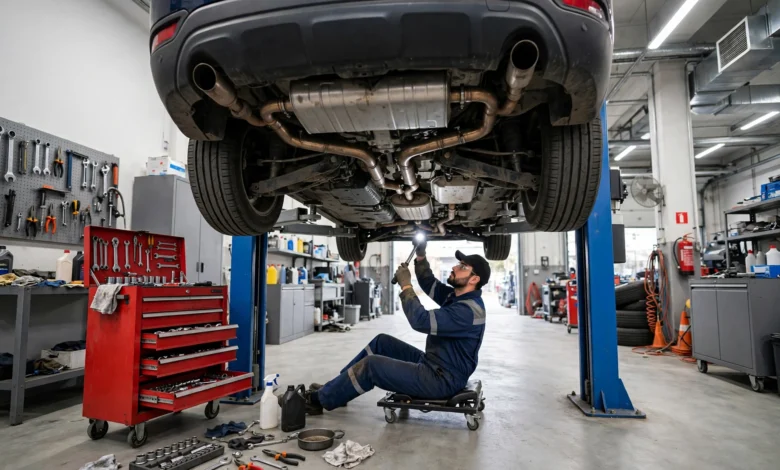
Searching for muffler shops near me is the fastest way to find a local garage that can diagnose a noisy exhaust, repair or replace a muffler, and check the rest of your exhaust system before a small fault turns into a failed MOT or an expensive repair. A good muffler shop will inspect the whole system — the muffler, the exhaust pipes, the catalytic converter and the mountings — explain what actually needs doing, and give you a clear written quote before any work starts. This guide explains what muffler shops do, the warning signs to watch for, what repairs typically cost, and how to choose a garage you can trust with your car.
What Do Muffler Shops Near Me Actually Do?
A search for muffler shops near me should lead you to a garage that specialises in exhaust systems, which means far more than simply swapping a noisy silencer for a new one. A proper exhaust specialist inspects the entire system from the engine manifold to the tailpipe, checking the muffler, the intermediate and tail pipes, the flexible joints, the rubber mountings and the catalytic converter, because a rattle or a leak in one part often points to wear somewhere else. They can weld a small hole, replace a corroded section, fit a new muffler, or replace a damaged catalytic converter, and they will also check that the system is sealed properly so that harmful exhaust gases cannot leak into the cabin.
Muffler shops also handle the diagnostic side of exhaust problems, which matters because exhaust noise and poor performance can have several different causes. A good technician will put the car on a ramp, run the engine, and listen and look for leaks, loose heat shields, broken hangers or a blocked converter, rather than simply guessing at the noisiest part. Many shops also carry out emissions-related checks and can advise whether an exhaust fault is likely to affect your MOT, and in the UK the GOV.UK MOT guidance makes clear that the exhaust system, including its condition and emissions, is part of the annual test, so a proper inspection before your MOT can save a failure and a retest fee.
How Do I Know My Muffler Needs Repair or Replacement?
The most obvious sign that you need muffler shops near me is noise, because a healthy exhaust system is quiet and a failing muffler makes itself heard long before it fails completely. A sudden deep roar, a rattling sound when you accelerate, a hissing noise that suggests a leak, or a metallic knocking over bumps all point to exhaust trouble, and each sound hints at a different fault, from a hole in the muffler to a broken mounting or a loose heat shield. If your car has suddenly become much louder, do not ignore it, because exhaust gases are hot and toxic, and a leak near the cabin is a safety issue as well as an annoyance.
Other warning signs are easier to miss but just as important, and they are worth checking regularly even when the car still sounds normal. A smell of exhaust fumes inside the car, visible rust or holes on the muffler and pipes, a tailpipe that hangs lower than usual, reduced fuel economy, or a loss of power can all indicate exhaust damage, and a dashboard engine warning light can also be triggered by a faulty catalytic converter or an exhaust leak affecting the sensors. If you notice any of these symptoms, book an inspection promptly, because a small hole can be welded cheaply while a corroded system left for months may need a full replacement that costs far more. The RAC’s advice on exhaust problems also lists the warning signs worth checking before you book an inspection.
How Much Does Muffler Repair Cost?
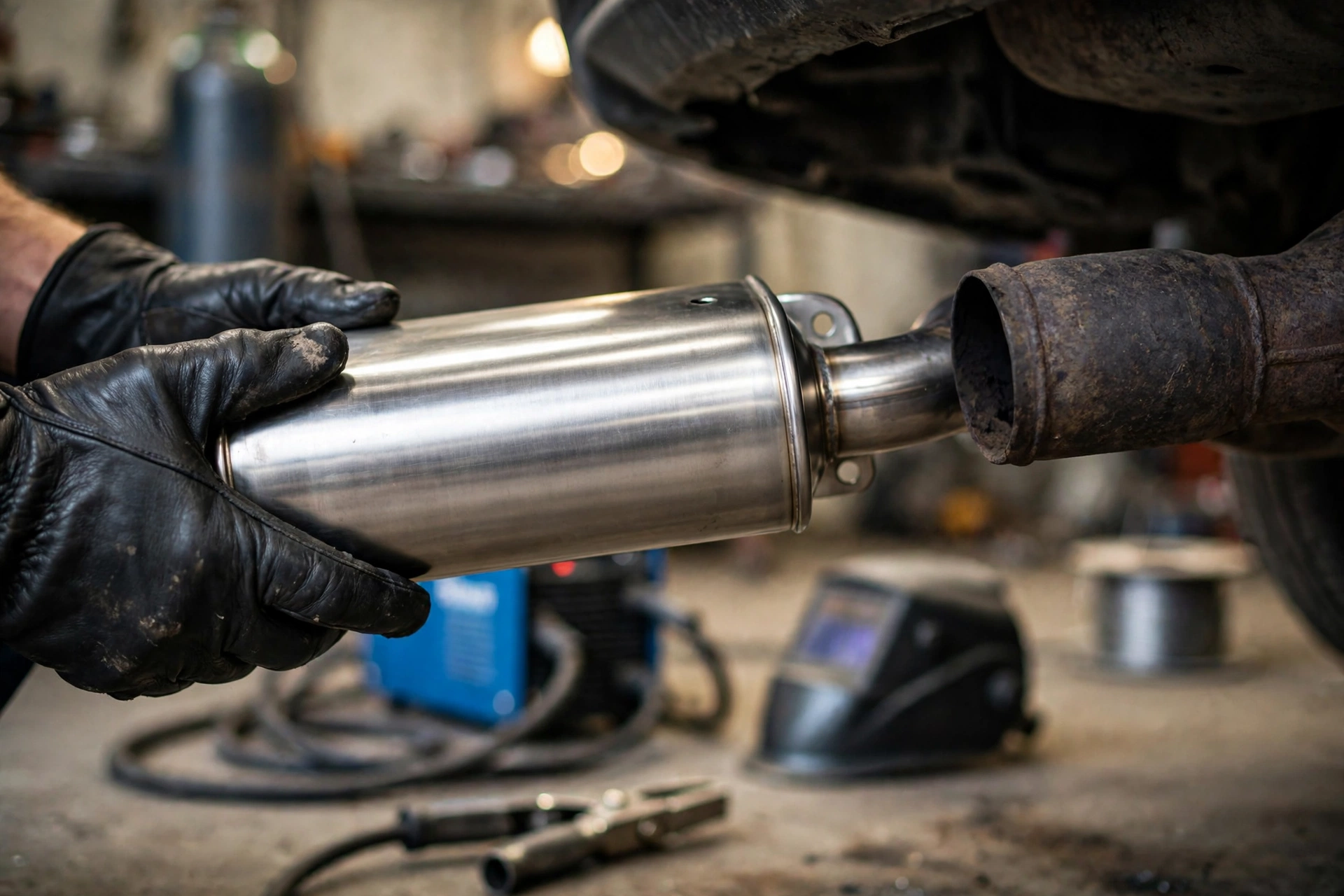
The cost of work at muffler shops near me varies by location, the make and model of your car, and whether the job is a small repair or a full replacement, so any price you see online should be treated as a typical range rather than a fixed quote. As of November 2026, a simple repair such as welding a small hole or replacing a rubber mounting can be relatively inexpensive, often in the region of £50 to £150, while replacing a muffler itself typically falls in the region of £150 to £400 including parts and labour, depending on the vehicle. A catalytic converter replacement is a different scale of job entirely and can cost £500 to well over £1,000, because the part contains precious metals and varies hugely between models, so always get a written quote for your specific car.
Several factors influence the final bill, and knowing them helps you judge whether a quote is fair instead of simply accepting the first figure you are given. The age and model of your car matters, because exhaust parts for common models are cheap and easy to source while parts for rare or performance cars cost more and may need ordering. The condition of the surrounding pipes matters too, since a corroded system may need several sections replaced at once, and labour rates vary by region, with garages in large cities generally charging more than those in smaller towns. A trustworthy shop will show you the damaged parts, explain why each item needs replacing, and itemise parts and labour separately on the quote.
How to Choose the Best Muffler Shop Near You
Choosing between muffler shops near me starts with reputation, because a garage that has served the same area for years has a record you can check before you hand over your keys. Look for recent independent reviews that mention exhaust work specifically, ask friends or neighbours who they use, and favour a shop that is happy to show you the underside of your car and explain the fault in plain language. A specialist exhaust garage or a well-established independent garage with exhaust experience is usually a better choice than a general fast-fit chain for a complex fault, although a reputable chain can be fine for a straightforward muffler replacement.
Credentials and transparency are the second test, and they separate the garages worth trusting from those worth avoiding. A good shop will give you a written estimate before starting work, will ask for your approval before doing anything beyond that estimate, and will return your old parts if you ask. Check whether the garage offers a warranty on parts and labour, since a reputable muffler shop will typically guarantee its exhaust work for at least twelve months, and be wary of any garage that refuses to put a price in writing, pressures you to agree immediately, or cannot explain what is wrong with your car in terms you understand.
What to Expect During a Muffler Repair Visit
When you visit one of the muffler shops near me, expect the process to start with an inspection rather than an immediate repair, because a responsible garage diagnoses before it quotes. The technician will usually raise the car on a ramp, examine the full exhaust system, start the engine to listen for leaks, and then explain the findings and the options, which may range from a simple weld to a section replacement or a whole new system. This inspection is often free or low cost, and it should end with a clear written quote showing parts, labour and VAT, plus an honest opinion on whether the repair is urgent or can safely wait a short while.
Once you approve the work, a straightforward muffler replacement typically takes between one and two hours, while a full system replacement or a catalytic converter job can take half a day, depending on how corroded the old parts are and whether seized bolts slow the job down. A good garage will call you if they find extra damage once the old parts are off, rather than simply adding to the bill, and they will test the car afterwards for leaks and noise before handing it back. Before you leave, ask for the old parts to be shown to you, check the warranty paperwork, and keep the invoice, because a documented repair history supports your car’s value and helps at MOT time.
Mufflers, Catalytic Converters and Emissions Rules
The muffler is only one part of your exhaust system, and understanding the catalytic converter matters too, because it is the component that cleans harmful gases from the exhaust before they leave the tailpipe. The converter uses precious metals to turn carbon monoxide, hydrocarbons and nitrogen oxides into less harmful gases, and when it fails, your car can fail its MOT emissions test, lose power, or trigger a warning light on the dashboard. A converter can be damaged by engine misfires, oil contamination or physical impact, and because it is expensive, a good muffler shop will check the engine fault codes before recommending a replacement, since fitting a new converter without fixing the underlying fault simply ruins the new part.
Emissions rules are also why exhaust repairs should never be improvised, and in the UK the MOT test includes a check of the exhaust system and an emissions test that your car must pass. GOV.UK guidance on MOT testing confirms that a vehicle with a leaking exhaust, a missing catalytic converter where one was fitted as standard, or excessive emissions will fail, and driving with a damaged exhaust can also lead to a fine if the vehicle is excessively noisy. A reputable muffler shop will fit parts that meet the correct specification for your car, keep the emissions system intact, and advise you honestly when a repair is needed to stay legal rather than simply selling you the most expensive option.
Conclusion
Finding the right garage among the muffler shops near me comes down to a few simple habits: pay attention to the warning signs, get the car inspected on a ramp before agreeing to any work, and insist on a clear written quote that separates parts from labour. A noisy exhaust is not a problem to ignore, because a small leak can grow into a failed MOT, a damaged catalytic converter or exhaust fumes in the cabin, and the cheapest repair is almost always the one done early. Choose a local shop with a solid reputation, a willingness to show you the fault, and a warranty on its work, and your car will be quieter, cleaner and safer for it. If your exhaust has started roaring, rattling or smelling, book an inspection this week, and if you want a broader look at local exhaust specialists, our guide to the top exhaust shops near me is a useful place to continue your research.
If your car has started making a new noise, the smartest move is to book an inspection before the problem grows, because exhaust faults rarely fix themselves and almost always become more expensive with time. A short visit to a trusted local garage can confirm whether the fault is a simple fix or something more serious, and the written quote you receive gives you the facts you need to make a calm decision. Keep the invoice and the warranty paperwork once the work is done, because a documented exhaust repair supports your car’s service history and makes the next MOT far less stressful than the last one.
How long does a muffler replacement take?
A straightforward muffler replacement usually takes between one and two hours once the car is on the ramp, while a full exhaust system replacement can take half a day. As of November 2026, most local muffler shops will confirm the expected time when they quote, and the job should include a leak and noise check before the car is handed back. The time can stretch if old bolts are seized with rust or if extra corrosion is found once the old parts are removed, so a good garage will warn you about this possibility in advance. Most shops can complete a simple replacement while you wait, but it is sensible to leave the car for the morning if a full system is being fitted, so the technicians are not rushed.
Can I drive with a damaged muffler?
You can drive a short distance to a garage, but you should not ignore a damaged muffler for long, because a leaking exhaust can allow harmful fumes into the cabin and a loose muffler can detach while driving. A noisy exhaust can also fail the MOT and may attract a fine, so book an inspection at a local muffler shop as soon as you notice the problem. Carbon monoxide from exhaust fumes is colourless and odourless, which makes a leak particularly dangerous if fumes enter the cabin, so open a window and drive straight to a garage if you smell exhaust inside the car. A muffler that is hanging low or dragging should be treated as urgent, because it can catch on the road and cause far more damage.
Will a faulty muffler cause my car to fail its MOT?
Yes, it can, because the MOT test includes an inspection of the exhaust system and an emissions test, according to GOV.UK MOT guidance. A leaking exhaust, excessive noise, a missing catalytic converter or emissions above the permitted limit are all reasons for failure, which is why having exhaust faults repaired before the test is sensible. The tester will also check that the exhaust is secure and that no part of it is in danger of falling off, and a car with a damaged catalytic converter will almost always fail the emissions test. Booking an exhaust inspection a few weeks before your MOT is due gives you time to have any faults repaired without the pressure of a retest deadline.
What is the difference between a muffler and a catalytic converter?
The muffler, also called a silencer, reduces the noise of the exhaust gases leaving the engine, while the catalytic converter cleans harmful gases from the exhaust before they leave the tailpipe. Both are part of the same exhaust system, they sit in different positions along it, and they fail in different ways, so a good muffler shop checks the whole system rather than just the noisy part. The muffler sits towards the rear of the car and uses chambers to quieten the exhaust note, while the converter sits closer to the engine where the gases are hottest, which is where it can do its cleaning work. Because a failing converter can damage the engine and a failing muffler can mask other faults, a proper inspection always covers the full length of the system from manifold to tailpipe.
How much does muffler repair cost in the UK?
As of November 2026, a small repair such as welding a hole or replacing a mounting typically costs in the region of £50 to £150, a muffler replacement typically falls in the region of £150 to £400, and a catalytic converter replacement can cost £500 to well over £1,000, with all prices varying by vehicle, location and parts. Always get an itemised written quote for your specific car. The make and model of your car has the biggest effect on the bill, because exhaust parts for common models are cheap and widely available while parts for rare or performance cars cost more and may need to be ordered. Labour rates also vary by region, so comparing two or three written quotes from local garages is the simplest way to check that the price you are offered is fair.
Does a new muffler improve fuel economy?
A new muffler can restore fuel economy if the old one was blocked or leaking, because a damaged exhaust can disrupt the engine’s back pressure and sensor readings, but a healthy muffler on its own will not make a car dramatically more economical. If your fuel consumption has worsened suddenly, ask the muffler shop to check the whole exhaust system, including the catalytic converter and oxygen sensors. The oxygen sensors sit in the exhaust and tell the engine management system how to mix fuel and air, so a leak near a sensor can make the engine run rich and waste fuel. If economy has dropped alongside a louder exhaust, the two problems are very likely connected, and a full inspection will usually find the cause quickly.


