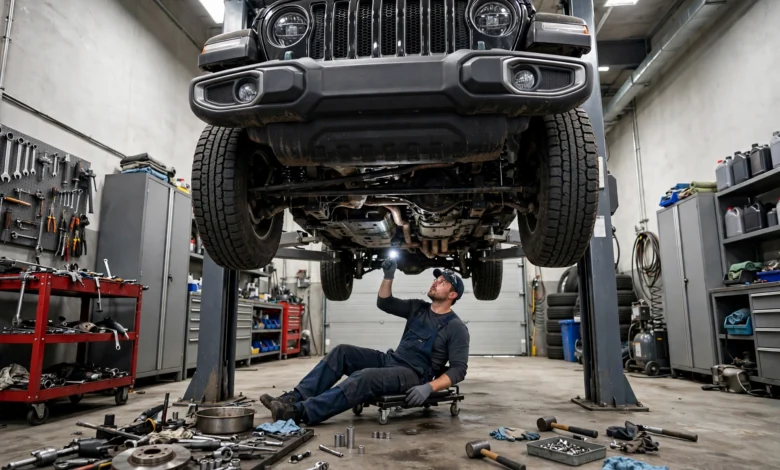
A jeep mechanic near me is the search every Jeep owner makes sooner or later, and the short answer is that the best choice is usually a garage with proven Jeep experience, good recent reviews, and clear, written quotes before any work starts. Jeeps are not like ordinary family cars, because they have four-wheel-drive systems, solid axles on some models, and off-road hardware that a general garage may see only rarely, so finding a mechanic who knows the brand properly can save you money, time and repeat visits. In this guide, we explain what a Jeep specialist actually does, the warning signs that mean your Jeep needs attention, how to find a good garage near you, and the questions to ask before you hand over your keys.
There is no single garage that is right for every Jeep owner, because the best choice depends on your model, its age, how you use it, and what work it needs. A Wrangler that goes off-road every weekend has different needs from a Compass that only does the school run, and a ten-year-old Grand Cherokee with high mileage needs a different approach from a nearly new Renegade still under warranty. That is why this guide focuses on how to judge a garage for yourself, rather than telling you to pick one name off a list, because a mechanic you can trust is worth far more than a garage that simply happens to be closest to your house.
What Does a Jeep Mechanic Near Me Actually Do?
A Jeep mechanic is a technician who services, diagnoses and repairs Jeep vehicles, and the work covers everything from routine servicing and MOT preparation to complex jobs on four-wheel-drive systems, suspension, steering and engines. On a day-to-day basis, that means oil and filter changes, brake work, tyre checks, battery testing and fluid top-ups, alongside diagnostic work when a warning light appears on the dashboard or the Jeep develops a noise, a vibration or a leak. A good Jeep mechanic will also understand the brand’s specific systems, such as Selec-Terrain drive modes, Quadra-Trac and Quadra-Drive four-wheel-drive systems, and the solid front axles used on the Wrangler, because these are the parts where Jeep-specific knowledge makes the biggest difference to getting a repair right first time.
The diagnostic side of the job has become just as important as the spanners, because modern Jeeps are full of sensors, control modules and software, and a fault that feels like a mechanical problem can sometimes turn out to be an electrical or software issue. A properly equipped Jeep specialist will have diagnostic tools that can read Jeep-specific fault codes, rather than only generic codes, and that matters because generic readers often miss the detail needed to find the real cause. When you visit a garage, it is worth asking what diagnostic equipment they use and whether they have experience with your exact model and year, because a mechanic who works on Jeeps every week will usually find a fault faster, and charge you for less guesswork, than one who sees a Jeep once in a blue moon.
Why a Jeep Specialist Beats a General Garage
There is nothing wrong with a good general garage, and many of them do excellent work on everyday cars, but Jeeps reward specialist knowledge in ways that are worth understanding before you choose where to take yours. The four-wheel-drive system is the obvious example, because a fault in a transfer case, a differential or a driveshaft needs someone who knows how those parts work together, and a misdiagnosis there can lead to expensive parts being replaced for no reason. Suspension and steering are another area, because Wranglers in particular are known for handling quirks such as steering wander and the wobble some owners call death wobble, and a specialist will have seen those problems many times before and will know the proper checks to run.
Specialists also tend to stock, or be able to source quickly, the right parts for your Jeep, including genuine Mopar parts and quality aftermarket alternatives, and they will know which parts are worth buying genuine and which are fine as pattern parts. That knowledge saves you from paying main-dealer prices on a part that does not need to be genuine, and it also saves you from a cheap part that will fail again in six months. A specialist garage will also be familiar with common faults on each model, so when you describe a symptom, they will often know the likely cause before they even lift the bonnet, and that experience usually means a quicker diagnosis, a more accurate quote and fewer return visits for the same problem.
Warning Signs Your Jeep Needs a Mechanic
Your Jeep will usually tell you when something is wrong, and learning to recognise the early warnings can save you from a breakdown and a much bigger repair bill. The most obvious sign is a warning light on the dashboard, and while a check-engine light can mean many things, it should never be ignored for long, because the fault behind it can worsen while you keep driving. Unusual noises are another clear signal, including grinding when you brake, clunking over bumps, whining from the drivetrain, or a knocking sound from the engine, and each of those points to a different system that needs checking. Leaks are equally important, so if you notice puddles under the Jeep, whether they look like oil, coolant or transmission fluid, get the vehicle checked promptly rather than topping up and hoping for the best.
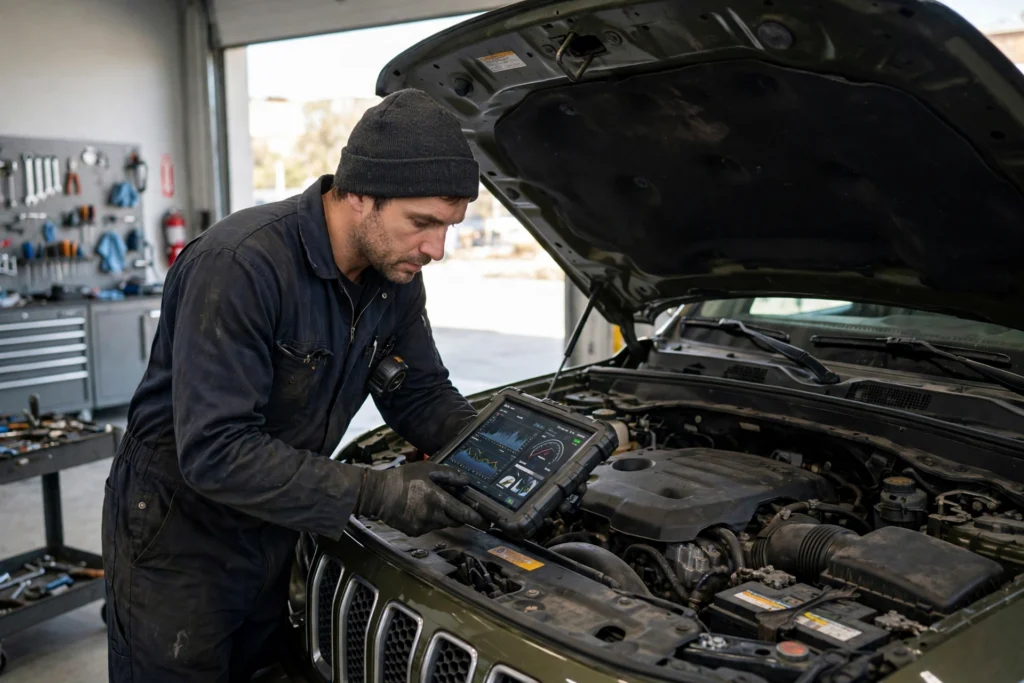
Other warning signs are subtler but just as important, and they include changes in how the Jeep drives, such as pulling to one side, vibration through the steering wheel, a spongy brake pedal, or difficulty changing gear. Overheating is a particularly serious symptom, because a temperature gauge climbing into the red can mean a cooling system fault that will damage the engine if you keep driving, and you should pull over safely and switch off rather than push on to your destination. A drop in fuel economy, a rough idle, or trouble starting can also point to developing problems, and they are all cheaper to fix early than late. If your Jeep smells of fuel or burning, our guide to why a car smells like petrol explains the possible causes in more detail, and that smell should always be investigated promptly. As a rule, if something about your Jeep has changed and you cannot explain why, it is worth a mechanic’s opinion sooner rather than later.
How to Find a Good Jeep Mechanic Near You
Finding a good Jeep mechanic near you starts with research rather than simply choosing the closest garage, because a little checking beforehand usually leads to a much better experience. Start by searching for garages that specifically mention Jeep servicing and repair, and look for evidence that they actually work on Jeeps regularly, such as customer reviews mentioning Wrangler, Cherokee or Grand Cherokee models by name. Reviews on Google and independent platforms are a good guide, but read them properly rather than only looking at the star rating, because a garage with a slightly lower rating and detailed, recent reviews is often a better bet than one with a perfect score from a handful of old reviews. Ask Jeep-owning friends, local owners’ groups and online Jeep forums for recommendations too, because personal experience from another Jeep owner is one of the most reliable signals you can get.
Once you have a shortlist of two or three garages, visit them or call them before you book any work, and pay attention to how they treat you as much as what they charge. A good garage will listen to your description of the problem, ask sensible questions, explain what they plan to check, and give you a written estimate before starting, and they will not pressure you into work you have not agreed to. Look at the workshop itself if you visit, because a tidy, organised garage with modern equipment is a good sign, and check whether the garage belongs to a recognised trade body or follows an industry code of practice, such as The Motor Ombudsman’s Service and Repair Code, which commits garages to honest pricing and proper complaint handling. Finally, check your Jeep’s MOT history through the official GOV.UK service, because past advisories and failures tell a new mechanic a great deal about your vehicle’s condition.
Questions to Ask Before You Book
Asking the right questions before you book is the simplest way to protect yourself from poor work and surprise bills, and a good garage will welcome those questions rather than dodge them. Start by asking whether the garage has experience with your exact model and year, and how often they work on Jeeps, because that tells you immediately whether they are a genuine specialist or simply willing to take the job. Ask for a written estimate that breaks down parts and labour separately, and ask whether the price includes VAT, because a verbal figure that later grows by twenty percent is a common source of arguments between garages and customers. You should also ask whether they will use genuine Mopar parts or aftermarket parts, what warranty they offer on parts and labour, and how long the work is likely to take, because those answers tell you a great deal about the garage’s confidence in its own work.
It is also worth asking what happens if the mechanic finds something extra once the work has started, because additional faults are common on older vehicles and a good garage will always call you for approval before doing extra work rather than simply adding it to the bill. Ask whether they will show you the old parts they removed, because that is a simple and reasonable check that the work was actually done, and ask how they will keep you updated if the job takes longer than expected. Finally, ask about payment methods and whether a courtesy car or a lift is available, because those practical details matter when you are without your vehicle for a day. If a garage is evasive about any of these questions, or refuses to put a quote in writing, treat that as a warning sign and take your Jeep somewhere else, because there are plenty of good garages that will answer happily.
Jeep Servicing, MOT and Warranty: What to Know
Servicing, MOT testing and warranty rules are three areas where Jeep owners often get confused, and getting them wrong can cost money, so it is worth understanding the basics before you book anything. Your Jeep’s service schedule is set by the manufacturer, and as of November 2026, Jeep owners should follow the schedule in their handbook or the guidance from an authorised Jeep service centre, because service intervals differ between models and engines. Regular servicing is not just about keeping the Jeep running well, because a full service history also protects the vehicle’s value when you come to sell it, and it can be essential if you ever need to make a warranty claim. Keep every invoice and stamp your service book, because that paper trail is your proof that the Jeep has been looked after properly.
The annual MOT test applies to most Jeeps over three years old in the UK, and it is worth preparing for it rather than treating it as a surprise, because many failures are for simple items such as worn tyres, faulty lights or weak brakes that a pre-MOT check would have caught. You can check your Jeep’s MOT history and its past advisories through the official GOV.UK check MOT history service, which is free and shows every test result and advisory recorded for your vehicle. On warranty, the important point is that in the UK you are not obliged to use a main dealer for servicing to keep your warranty valid, provided the garage uses parts of matching quality and follows the manufacturer’s service schedule, although you should keep full records and check your warranty terms. If your Jeep is still under a manufacturer or extended warranty, read the terms before booking independent work, because some warranties have specific conditions about who can carry out repairs.
Conclusion
Finding the right jeep mechanic near me comes down to choosing knowledge and trust over simple convenience, because a garage that understands Jeeps will diagnose faults faster, quote more accurately and fix problems properly the first time. Start with garages that show real Jeep experience, check their reviews carefully, ask for written quotes, and ask the questions that a good garage will be happy to answer. Pay attention to warning signs early, keep your servicing and MOT history in order, and do not ignore dashboard lights, strange noises or leaks, because small problems are almost always cheaper to fix than the big ones they turn into.
Your Jeep is built to be capable and tough, but it still needs the right care to stay that way, and the mechanic you choose is a big part of that care. Take the time to find a specialist you trust, build a relationship with them, and keep your service records tidy, and your Jeep will reward you with years of reliable driving, whether that is the daily commute or a weekend off the beaten track. When something does go wrong, you will already know exactly who to call, and that peace of mind is worth more than any saving from picking the cheapest garage in town.
How do I find a reliable jeep mechanic near me?
The most reliable way to find a jeep mechanic near me is to search specifically for garages that advertise Jeep servicing and repair, then check their reviews for mentions of Jeep models by name, such as Wrangler, Cherokee or Grand Cherokee. A garage with recent, detailed reviews from Jeep owners is a much stronger sign than a generic five-star rating, and recommendations from local Jeep owners’ groups or online Jeep forums are also very valuable. Make a shortlist of two or three garages rather than booking the first one you find, because comparing them properly takes little time and usually leads to a better result.
Once you have your shortlist, call each garage and ask about their Jeep experience, their diagnostic equipment, whether they give written estimates, and what warranty they offer on parts and labour. A good garage will answer all of those questions clearly and will not pressure you to book on the spot. You can also check a garage’s standing with trade bodies such as The Motor Ombudsman, and check your Jeep’s MOT history on GOV.UK before your visit so you can discuss past advisories with the mechanic.
How much does a Jeep repair usually cost?
The cost of a Jeep repair varies so much that no single figure is meaningful, because it depends on your model, its age, the fault itself, and whether genuine or aftermarket parts are used. A routine service or a brake pad change will cost far less than a four-wheel-drive repair, a clutch replacement or an engine fault, and prices also differ between main dealers, independent specialists and general garages, as well as between different parts of the country. Labour rates are a large part of any bill, so a job that takes three hours will naturally cost more than one that takes thirty minutes, even before parts are added.
The best approach is to get a written estimate from the garage before any work begins, with parts and labour shown separately and VAT included, and to compare estimates from more than one garage for larger jobs. Ask whether the estimate is fixed or whether it could change if the mechanic finds more damage once work starts, and ask the garage to call you for approval before doing any extra work. That way you stay in control of the cost, and you avoid the unpleasant surprise of a bill that is far higher than the figure you were first given.
Is it better to use a Jeep main dealer or an independent specialist?
There is no single right answer, because main dealers and independent Jeep specialists each have real advantages, and the best choice depends on your Jeep’s age, warranty status and the work it needs. A main dealer has factory-trained technicians, genuine Mopar parts and the latest Jeep diagnostic equipment, which can matter for complex faults, software updates and warranty work. An independent specialist, on the other hand, often charges less for labour, may be more flexible about parts, and can offer a more personal service, especially if they work on Jeeps every day and know the common faults inside out.
If your Jeep is still under manufacturer warranty, check the warranty terms before choosing, because some warranty work must be done by an authorised repairer, although routine servicing can usually be done by an independent garage using matching-quality parts. For an older Jeep out of warranty, a well-reviewed independent specialist is often the best value, provided they have genuine Jeep experience and proper diagnostic tools. Whichever you choose, ask for a written quote, check reviews, and make sure the garage guarantees its work in writing.
What are the most common Jeep problems?
The most common problems Jeep owners report vary by model, but some issues come up again and again across the range, and knowing them helps you describe symptoms clearly to your mechanic. Electrical faults are common, including battery drain, faulty sensors and warning lights that appear without an obvious cause, and these often need proper diagnostic equipment to trace. Suspension and steering complaints are also frequent, particularly on the Wrangler, where owners report steering wander, vibration and the shaking sometimes called death wobble, which usually has a steering or suspension cause that a specialist can diagnose.
Other frequent issues include oil leaks, cooling system problems, and four-wheel-drive faults such as noisy differentials or transfer case trouble, particularly on higher-mileage vehicles. None of these problems means your Jeep is a bad vehicle, because every brand has its known weak spots, and most of them are well understood by experienced Jeep mechanics. The important thing is to act early when you notice a symptom, because a small leak or a slight vibration is usually cheaper and simpler to fix than the same fault after months of being ignored.
Should I keep servicing my Jeep at a main dealer to protect its value?
Keeping a full service history is what protects your Jeep’s value, rather than the badge on the garage door, because buyers and dealers care most about proof that the vehicle was serviced on time and to the manufacturer’s schedule. A main dealer service history is attractive to some buyers, but a complete history from a reputable independent Jeep specialist, with invoices and a stamped service book, is also strong evidence that the Jeep has been looked after. What damages value is a missing or patchy history, long gaps between services, or no paperwork at all, regardless of where the work was done.
In the UK, you are not required to use a main dealer to keep your manufacturer warranty valid, as long as the garage follows the manufacturer’s service schedule and uses parts of matching quality, although you should read your warranty terms carefully and keep every invoice. If you use an independent garage, make sure they record the work properly and use the correct oil and parts for your model. A tidy folder of service records, MOT certificates and repair invoices will help your Jeep hold its value and will make it easier to sell when the time comes.