Ceiling Fan Installation Near Me: How to Find a Trusted Local Electrician

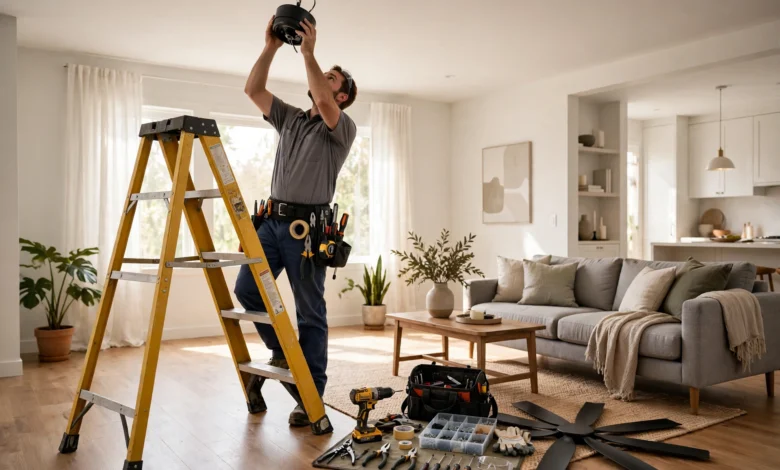
Searching for ceiling fan installation near me is the quickest way to find a qualified local electrician who can fit a ceiling fan safely, because a proper installation needs a fan-rated ceiling mount, correct wiring and a secure electrical connection, and those are jobs for a trained professional rather than a weekend DIY attempt. A good local installer will survey your ceiling, confirm the wiring and the mounting point can carry the fan’s weight and movement, fit the fan to the manufacturer’s instructions, and test it thoroughly before leaving. This guide explains what the job involves, what it typically costs, how to choose a trustworthy installer, and the questions worth asking before anyone climbs a ladder in your home.


What Does Ceiling Fan Installation Near Me Actually Involve?
A professional ceiling fan installation near me search should lead you to an electrician who begins by checking the ceiling itself, because a ceiling fan is a heavy, moving appliance that cannot simply be screwed into plasterboard or hung from an ordinary light fitting. The installer will confirm there is a fan-rated bracket or joist fixing, check the existing wiring and the switch arrangement, and make sure the ceiling height leaves enough clearance for the blades to spin safely above head height. Where no suitable fixing exists, they will fit a proper support bracket or a fan-rated ceiling box, and this structural step is precisely what separates a safe, quiet installation from one that wobbles, hums or works loose over time.
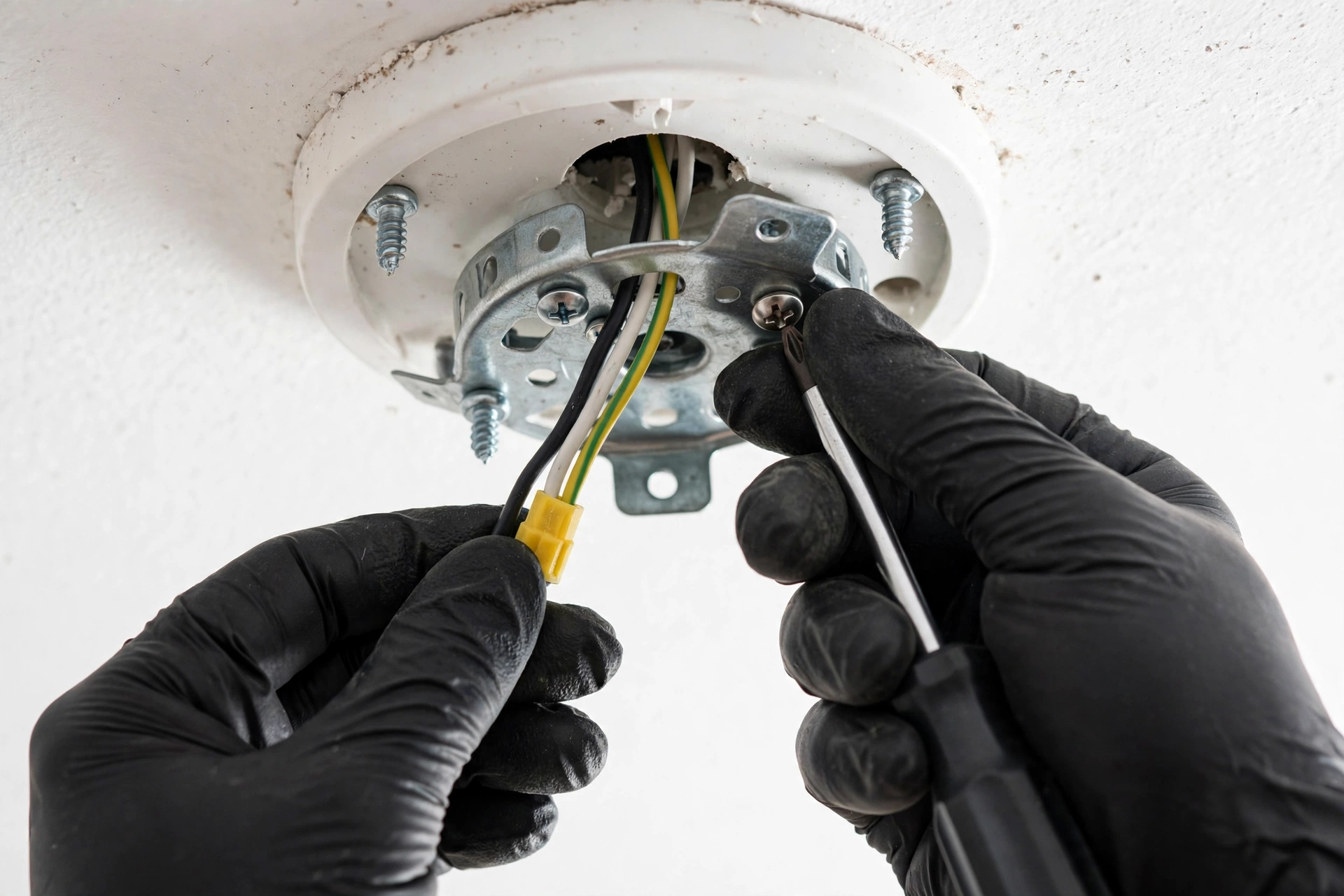
Once the mounting is secure, the electrician connects the fan to the household wiring, fits the downrod and motor housing, attaches the blades and any light kit, and then balances the fan so it runs smoothly at every speed. A careful installer will also check that the fan’s direction switch works, because most modern fans can reverse to push warm air down in winter, and they will test the pull cord, wall control or remote before tidying up. According to guidance from Electrical Safety First, electrical work in the home should always be carried out by a competent, registered electrician, and a ceiling fan is no exception, since faulty wiring hidden above a ceiling can become a genuine fire risk long after the installer has gone.
How Much Does Ceiling Fan Installation Cost?
The cost of ceiling fan installation near me varies by location, the complexity of the job and whether new wiring or a new ceiling support is needed, so any figure you are quoted should be treated as a guide rather than a fixed national price. As of November 2026, a straightforward replacement of an existing fan or light fitting in the UK typically falls in the region of £80 to £200 for labour, while a brand-new installation that needs new wiring, a new switch or a fan-rated ceiling bracket can cost considerably more, often £200 to £400 or above depending on access and the condition of the existing electrics. Always ask for an itemised written quote so you can see exactly what the labour, materials and any call-out charge cover before work begins.
Several factors can push the price up or down, and understanding them helps you judge whether a quote is fair rather than simply picking the cheapest option available. A high ceiling that needs taller access equipment, a fan with an integrated light that requires a separate switched feed, a remote-control receiver that must be wired into the canopy, or a ceiling with no accessible joist will all add time and materials to the job. Equally, supplying your own fan can reduce the bill, but many electricians prefer to supply the fan themselves so they can guarantee the product and the workmanship together, which is worth discussing when you compare quotes from different local installers.
How to Find a Qualified Electrician for Ceiling Fan Installation Near Me
Finding a reliable professional for ceiling fan installation near me starts with checking credentials rather than simply choosing the first name in the search results, because the person fitting your fan will be working on your home’s electrical system. In the UK, look for an electrician registered with a recognised competent-person scheme such as NICEIC or NAPIT, and ask to see proof of registration along with public liability insurance before any work starts. A genuine professional will be happy to share these details, provide references from recent local jobs, and explain exactly how they will mount and wire your fan, while anyone who avoids these questions should be treated as a warning sign.
Local reputation is the second filter, and it is often more revealing than a polished website or a long list of claimed qualifications. Read recent reviews on independent platforms, ask neighbours or friends who have had similar work done, and look for installers who specialise in domestic electrical work rather than general handyman services, since ceiling fans need proper electrical knowledge. A good local electrician will also be easy to contact, will turn up when promised for a survey or quote, and will leave a clear paper trail with a written quotation and a minor works certificate where applicable, which protects you if anything goes wrong later.
What to Ask Before You Book a Ceiling Fan Installation
Before booking ceiling fan installation near me, ask the installer whether the price includes the fan itself or labour only, whether a fan-rated mounting bracket is included, and how long the job is expected to take, because clear answers at this stage prevent misunderstandings on the day. You should also ask whether the work will be certified, what guarantee covers the labour, and whether the installer will remove and dispose of the old fitting, since these details are easy to overlook and expensive to argue about afterwards. A professional will answer each question plainly and in writing, and will flag any extra costs, such as making good to the ceiling or plaster, before they start work.
It is also worth asking practical questions about the fan you have chosen and the room it will serve, because the right fan depends on the size and shape of the space. Ask whether the blade span suits the room, whether the drop rod length gives safe clearance above the floor, and whether the fan’s airflow direction can be reversed for winter use, since a fan that is too small will barely move the air while one that hangs too low becomes a hazard. An experienced installer will measure the room, check the ceiling height, and may even suggest a different model if the one you picked is unsuitable, and that honest advice is a good sign that you have found someone worth hiring.
Common Ceiling Fan Installation Problems and How Professionals Avoid Them
One of the most common problems after a ceiling fan installation is wobbling, and it almost always comes back to a mounting that was never designed to carry a moving load, which is why professionals insist on a fan-rated bracket fixed to a joist or a proper support. A fan hung from a standard light fitting rose or a plasterboard fixing will shake, hum and gradually work itself loose, and the noise alone is enough to make the room unusable. A qualified electrician avoids this entirely by checking the structure first, using the correct fixings, and balancing the blades with the balancing kit supplied by the manufacturer, so the fan runs quietly even at full speed.
Other frequent faults include flickering lights when the fan and light share a circuit, a remote control that stops responding, and a fan that hums on a dimmer switch never designed for motors. These problems usually trace back to wiring that was improvised rather than planned, and they are the reason Electrical Safety First advises homeowners to use a registered electrician for any work that changes a circuit. A professional will wire the fan on its own switched feed where needed, fit a compatible controller rather than a standard light dimmer, and test every function before leaving, so the small extra cost of hiring properly pays for itself in a fan that simply works.
Ceiling Fans, Energy Efficiency and Year-Round Comfort
A well-installed ceiling fan is one of the cheapest ways to make a room feel cooler in summer, because moving air across the skin helps sweat evaporate and makes the room feel several degrees cooler without the running costs of air conditioning. According to the US Environmental Protection Agency’s ENERGY STAR programme, certified ceiling fans use energy-efficient motors and improved blade designs that move air effectively while consuming less electricity than older models, and choosing an ENERGY STAR certified fan is a simple way to keep running costs down. In the UK, where summers are getting warmer, a fan paired with open windows on a warm evening can keep a bedroom comfortable at a fraction of the cost of a portable air conditioner.
Ceiling fans also earn their keep in winter, thanks to the reverse setting fitted to most modern models, which gently pushes warm air that has collected near the ceiling back down to where people actually sit. Running the fan slowly in reverse can make a heated room feel warmer without turning the thermostat up, and that small saving adds up across a heating season. The key is to buy a fan with a reversible motor and a suitable size for the room, and to have it installed by someone who shows you how to change the direction, so you get the benefit in every season rather than only in summer.
Conclusion
Finding the right person for ceiling fan installation near me comes down to three simple habits: check that the installer is properly qualified and insured, get a clear written quote that covers the mounting, the wiring and the testing, and ask the practical questions about room size and fan choice before work begins. A ceiling fan is a straightforward job for a competent electrician, but it is also a job where a poor fixing or careless wiring can cause years of noise, wobble or worse, so the cheapest quote is rarely the best value. Choose a local professional who inspects the ceiling, fits a fan-rated mount, wires the fan correctly and tests it properly, and you will have a quiet, efficient fan that keeps your home comfortable in summer and winter alike. If you are ready to start, shortlist two or three registered local electricians, compare their written quotes, and book the one who answers your questions clearly and honestly.
If you are still weighing up whether to hire a professional or attempt the job yourself, remember that the cost of a proper installation is small compared with the cost of repairing a damaged ceiling, replacing a fan that has worked loose, or dealing with faulty wiring discovered months later. A registered electrician brings the right fixings, the testing equipment and the certification, and the peace of mind that comes with a guaranteed job is worth far more than the saving from a DIY attempt. Take the time to compare two or three local quotes, check each installer’s credentials, and choose the professional who treats your questions seriously, because that attitude on the phone is usually the same attitude they bring to the work in your home.
How long does ceiling fan installation take?
A straightforward ceiling fan installation usually takes between one and two hours, according to typical trade guidance, while a new installation that needs fresh wiring or a new ceiling support can take half a day. As of November 2026, most local electricians will confirm the expected time when they quote, and the job should include testing the fan at every speed before they leave. If the ceiling needs a new fan-rated support bracket, or if wiring must be run from another circuit, the work can take longer, so ask for a realistic time estimate in the written quote. A professional will also allow time to balance the blades and demonstrate the controls, which means the fan should be running quietly and smoothly at every speed before the installer packs up and leaves.
Do I need an electrician to install a ceiling fan?
Yes, in most cases you should hire a qualified electrician, because installing a ceiling fan involves connecting to your home’s wiring and fitting a mount strong enough to carry a moving load. Electrical Safety First advises using a registered electrician for electrical work in the home, and a professional will also certify the work where required, which protects both your safety and your home insurance. In the UK, electrical work must also comply with Part P of the Building Regulations, and a registered electrician can certify the job for you. Attempting the work yourself risks a dangerous wiring fault hidden above the ceiling, and it can also create problems with your home insurance if something later goes wrong.
Can a ceiling fan be installed where a light fitting already exists?
Often yes, but only if the existing ceiling fixing is strong enough and the wiring is suitable, and this is something the electrician must check in person. A standard light fitting rose is not designed to hold a fan, so the installer will usually replace it with a fan-rated bracket fixed to a joist, which is a routine part of a professional ceiling fan installation. The electrician will also check the switch wiring, because a fan with a light may need a separate switched feed, and they will confirm the ceiling height gives safe clearance for the blades. If the existing point is unsuitable, fitting a new bracket and repositioning the fan is a normal part of the job, and it is far better to discover this during a survey than after a fan has been hung from a weak fixing.
What size ceiling fan do I need for my room?
As a general guide, rooms up to about 12 square metres suit a fan with a blade span of around 100 to 110 centimetres, while larger rooms need a wider span of 130 centimetres or more, but ceiling height and room shape also matter. Your installer can measure the room and recommend the right size, and ENERGY STAR guidance notes that choosing the correct size is essential for effective airflow. Long, narrow rooms may need two smaller fans rather than one large one, and a fan that hangs too low is a safety hazard, so the drop rod length must leave at least 2.1 metres of clearance above the floor. An experienced installer will measure both the floor area and the ceiling height before recommending a model, and will explain why that size suits your particular room.
How much does ceiling fan installation cost in the UK?
As of November 2026, a straightforward replacement typically costs in the region of £80 to £200 for labour, while a new installation needing new wiring or a ceiling bracket can cost £200 to £400 or more, with the final figure varying by location and job complexity. Always get an itemised written quote from a registered local electrician before agreeing to the work. Prices also vary by region, with electricians in London and the South East generally charging more than those elsewhere, and the cost of the fan itself is separate unless the quote says otherwise. Comparing two or three itemised written quotes is the best way to judge what is fair in your area, and the cheapest quote is not always the best value if it skips the proper mounting or certification.
Can a ceiling fan really help in winter?
Yes, most modern ceiling fans have a reverse setting that pushes warm air trapped near the ceiling back down into the room when run slowly, which can make a heated room feel warmer without raising the thermostat. The installer should show you how to switch the direction, and the fan must be run on its lowest speed in reverse to avoid creating a draught. This works because warm air rises and collects near the ceiling, so gently recirculating it can make the room feel warmer at the same thermostat setting, and many homeowners notice the difference immediately. The setting is usually changed with a small switch on the motor housing or through the remote control, and your installer should demonstrate it before leaving so you can use it confidently all winter.