Electronic Repair Near Me: How to Find a Trusted Repair Shop and What It Costs
Searching for electronic repair near me usually means something you rely on every day has stopped working — a phone with a cracked screen, a laptop that will not charge, a tablet with a dead battery, or a television that has gone dark — and the short answer is that the best first step is not the nearest shop but the most trustworthy one, because a good repairer will diagnose the fault honestly, quote before starting work, and stand behind the repair with a warranty. Most common faults, from broken screens to tired batteries, can be fixed the same day by a competent local shop, often for much less than the cost of a replacement device.


This guide explains what electronic repair covers, how to find a reliable shop near you, what to ask before you hand over your device, what affects the price, and what your rights are when a repair goes wrong. It also covers the UK’s right to repair rules, which have made spare parts easier to obtain for some appliances since 2021, and the limits of those rules, because they do not yet cover the phones and laptops that most people actually need repaired.
What Does Electronic Repair Near Me Cover?
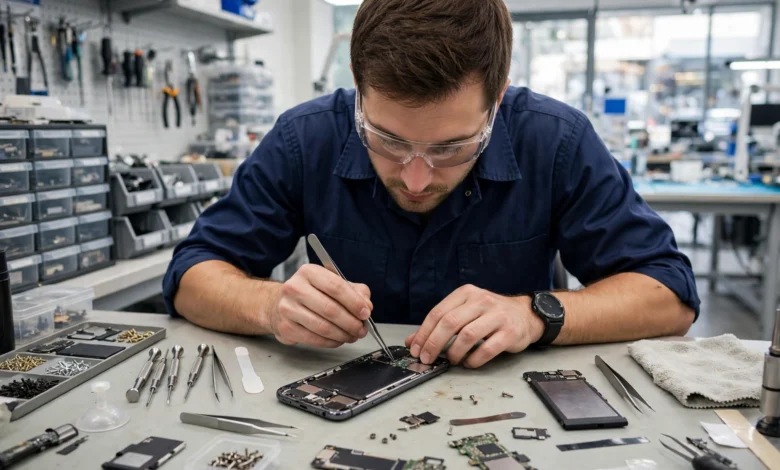
Electronic repair near me covers the fixing of everyday devices by local repair shops, and the most common jobs are phone screen and battery replacements, laptop charging port and keyboard repairs, tablet screen fixes, games console repairs, and television and small appliance repairs. A typical high street repair shop handles phones and tablets first, because those are the devices people carry everywhere and break most often, and many also repair laptops, smartwatches and headphones, while larger workshops take on televisions, audio equipment and household electronics that need bench testing rather than a quick swap of parts.
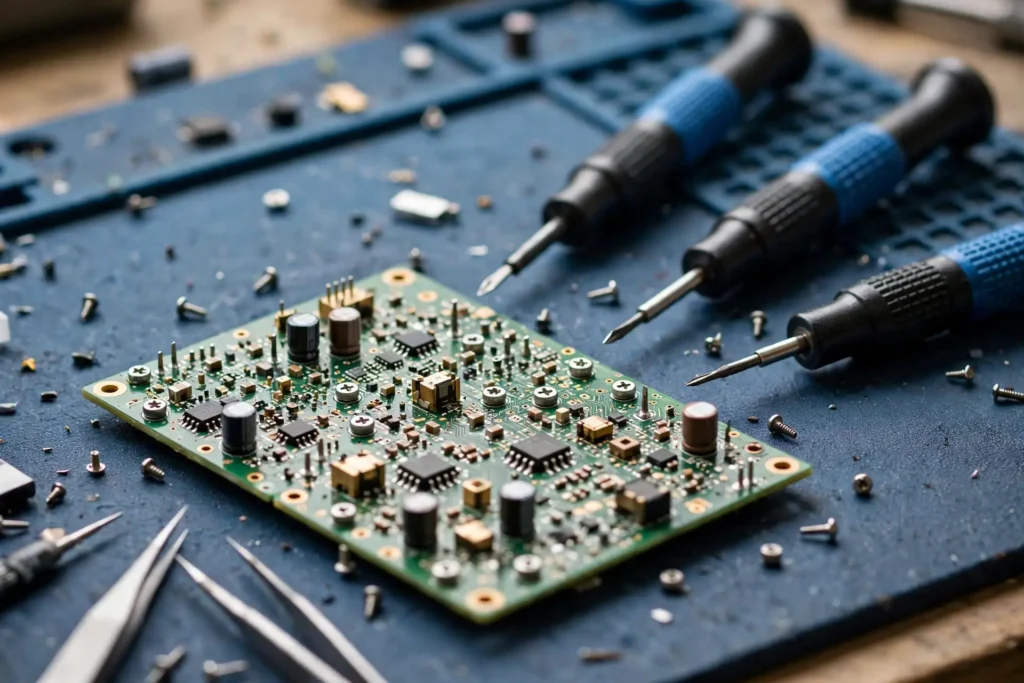
It helps to know the difference between a simple part swap and a board-level repair, because the two carry very different prices and risks. A screen, a battery or a charging port is a modular part that a competent technician can replace in under an hour, while a fault on the circuit board itself, such as water damage or a failed chip, needs specialist diagnosis and micro-soldering, takes longer, and may not always be fixable. A trustworthy shop will tell you which kind of job yours is before it starts, and will explain whether the part it plans to use is an original manufacturer part, a high-quality compatible part, or a cheaper copy, because that choice affects both the price and how long the repair lasts.
How Do You Find a Trustworthy Electronic Repair Shop Near You?
The most reliable way to find a trustworthy shop is to look for evidence rather than promises, starting with recent reviews from real customers on Google and other platforms, and paying attention to how the shop responds when something goes wrong. A shop with dozens of recent, detailed reviews that mention specific devices and fair prices is a better sign than a shop with a handful of vague five-star ratings, and a shop that answers complaints politely and offers to put things right is showing you how it will treat you if your repair has a problem. You should also check how long the shop has been trading, whether it has a real premises you can visit, and whether it offers a written warranty on its work.
Word of mouth still matters, so ask friends, family and colleagues who they have used and whether they would go back, because a personal recommendation from someone who has actually had a phone repaired is worth more than any advertisement. Trade directories and local business listings can help you build a shortlist, but they should be the start of your research rather than the end of it, and you should always visit or call the shop before committing. A good repairer will ask questions about the fault, explain what it thinks is wrong, and give you a price range before it opens the device, while a shop that quotes a fixed price without seeing the device, or pressures you to decide immediately, is giving you a reason to walk away.
What Should You Ask Before You Hand Over Your Device?
Before you hand over your device, ask for a written quote that separates the cost of the part from the cost of the labour, and ask how long the repair will take and what warranty comes with it. A reputable shop will usually offer at least a three-month warranty on parts and labour, and many offer six or twelve months, so a shop that offers no warranty at all is telling you something about its confidence in its own work. You should also ask whether your data will be safe, because a repairer may need your passcode to test the device, and you should back up your photos, messages and files before you leave the shop, then remove sensitive accounts if you can.
Ask what happens if the repair does not fix the problem, and whether you will still be charged for the diagnosis, because the answer separates honest traders from the rest. A good shop will explain that some faults only become clear once the device is open, and will call you before doing extra work that costs more than the original quote. You should also ask whether the shop uses original or compatible parts, and whether using a third-party part affects any remaining manufacturer warranty, since the answer varies by brand and by device. Finally, get the quote and the warranty in writing, even if it is only a text message or an email, because a written record is what protects you if anything is disputed later.
How Much Does Electronic Repair Usually Cost?
Prices for electronic repair near me vary widely, because the cost depends on the device, the fault, the part and the shop, and any guide that quotes a single price for a repair is misleading you. A phone battery replacement is usually one of the cheapest jobs, a screen replacement costs more because the part itself is expensive, and a board-level repair can cost as much as a refurbished replacement, which is why a good shop will compare the repair cost with the value of the device before it starts. The age of the device matters too, because parts for older models become harder to find and more expensive, while parts for popular current models are widely available and competitively priced.
The best way to judge a quote is to get two or three of them for the same job, and to compare what each one actually includes rather than just the headline figure. A quote that looks cheap may use a low-quality copy part with no warranty, while a slightly dearer quote may include an original-quality part, a twelve-month warranty and free re-testing if the fault returns. You should also ask whether the quote includes VAT, whether there is a separate diagnostic fee if you decide not to proceed, and whether the shop will call you before doing any work beyond the original quote. A repairer that answers those questions clearly is usually one you can trust, whatever the price turns out to be.
Is It Better to Repair or Replace?
Repair is usually the better choice when the device is less than three or four years old, the fault is a single part such as a screen or battery, and the repair costs less than about half the price of a comparable replacement, because you keep your data, your settings and a device you already know. It is also the better choice for the environment, since making a new phone or laptop uses far more energy and raw materials than fixing the one you already own, and the UK generates around one and a half million tonnes of electrical waste every year, a figure the government has cited as a reason for its right to repair rules. A repair that extends a device’s life by two years is a genuine saving in money, time and waste.
Replacement starts to make sense when the device is old, the fault is on the main circuit board, the repair would cost more than half the price of a replacement, or the device can no longer run the software you need. A phone that needs a new screen, a new battery and a new charging port at the same time is usually not worth repairing, and neither is a laptop whose battery has swollen or whose storage has failed alongside other faults. A trustworthy repairer will tell you this honestly rather than taking your money for a repair that will not last, and that honesty is itself a reason to use that shop again when your next device needs help.
What Are Your Rights When a Repair Goes Wrong?
Your rights when a repair goes wrong are stronger than many people realise, because a repair is a service covered by the Consumer Rights Act 2015, which requires any service to be carried out with reasonable care and skill. If the repair is faulty, if the shop damages your device, or if the shop uses a part that is not as described, you have the right to ask for the fault to be put right, and if it cannot be put right you may be entitled to a refund or a price reduction. You should raise the problem with the shop as soon as you notice it, keep the receipt and any written quote, and put your complaint in writing if the shop does not resolve it quickly.
The UK’s right to repair rules also help, although they are narrower than many people think. The Ecodesign for Energy-Related Products and Energy Information Regulations 2021, which came into force on 1 July 2021, require manufacturers of washing machines, dishwashers, fridges and televisions to make spare parts available for seven to ten years, but they do not yet cover smartphones and laptops, which are the devices most people actually need repaired. That gap is the subject of ongoing debate, and the Competition and Markets Authority has been examining whether software restrictions on third-party repairs are anti-competitive. For now, the practical protection for phone and laptop owners is a good local repairer, a written quote, and a warranty that the shop is willing to honour.
Conclusion
Finding good electronic repair near you comes down to evidence, not luck: check recent reviews, ask for a written quote that separates parts from labour, confirm the warranty, and back up your data before you hand anything over. Most common faults are quick, affordable fixes, and a repair is usually the smarter choice than a replacement when the device is still young and the fault is a single part. The UK’s right to repair rules have made parts easier to obtain for some appliances, but phones and laptops still depend on the skill and honesty of the person doing the work.
Choose the shop that answers your questions clearly, quotes honestly and stands behind its repairs, and you will get a device that works properly, a warranty you can rely on, and a repairer you can return to the next time something breaks. That is worth more than saving a few pounds on the cheapest quote in town. A repair that extends a device’s life by two years is a genuine saving in money, time and waste, and it keeps a working device out of the waste stream, which is a benefit that goes beyond the price of the repair itself.
How do I find electronic repair near me?
Start with recent Google reviews and personal recommendations, then shortlist two or three local shops and compare their written quotes for the same job. A trustworthy shop has a real premises, has been trading for a while, explains the fault before starting work, separates parts from labour in its quote, and offers a written warranty of at least three months on parts and labour. A shop that answers complaints politely and offers to put things right is showing you how it will treat you if your repair has a problem, and that response is as important a sign as any number of five-star ratings.
What should I ask before a phone repair?
Ask for a written quote separating parts from labour, ask whether the part is original or compatible, ask how long the repair takes and what warranty comes with it, and ask what happens if the repair does not fix the problem. Back up your photos and files before you hand the phone over, and get the quote and the warranty in writing, even if it is only a text message or an email. You should also ask whether your data will be safe, because a repairer may need your passcode to test the device, and you should remove sensitive accounts if you can before you leave the shop.
How much does phone screen repair cost?
The cost depends on the phone model, the type of screen and whether the part is original or compatible, so no single price applies to every repair. Screen replacements cost more than battery replacements because the part itself is expensive, and older models can cost more because parts are harder to find. Get two or three written quotes for the same job and compare what each one includes, including the warranty, rather than judging on the headline figure alone. A quote that looks cheap may use a low-quality copy part with no warranty, while a slightly dearer quote may include an original-quality part and a twelve-month warranty.
Does the UK right to repair law cover phones?
No, the UK’s Ecodesign Regulations 2021, in force since 1 July 2021, require manufacturers to make spare parts available for seven to ten years for washing machines, dishwashers, fridges and televisions, but they do not cover smartphones and laptops. The Competition and Markets Authority has been examining software restrictions on third-party repairs, and pressure to close the gap is growing, but as of November 2026 phones and laptops remain outside the legislation. For now, the practical protection for phone and laptop owners is a good local repairer, a written quote, and a warranty that the shop is willing to honour.
Will an independent repair void my warranty?
Not automatically. Under UK consumer law, a manufacturer cannot automatically void a warranty simply because you chose an independent repairer rather than an authorised service centre, provided the repair was carried out competently and with appropriate parts. Ask the repairer whether the part it plans to use affects any remaining manufacturer warranty, and keep the receipt and the written quote as your record. If the repair is faulty, or if the shop damages your device, the Consumer Rights Act 2015 gives you the right to ask for the fault to be put right, and if it cannot be put right you may be entitled to a refund or a price reduction.