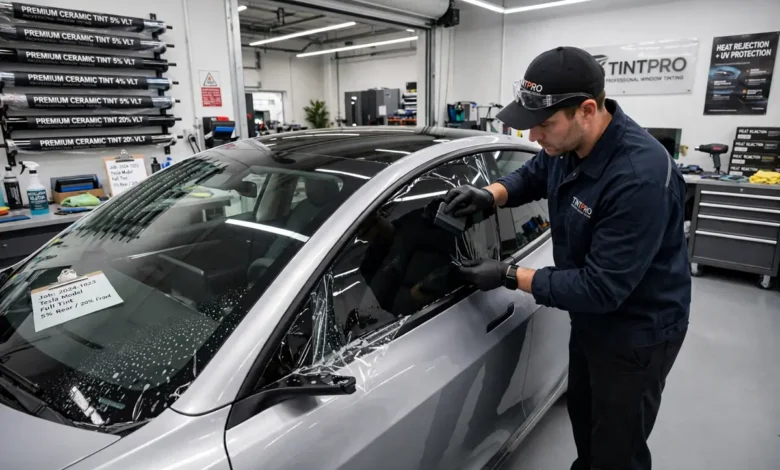
Window Tinting Service Near Me: How to Find One and Stay Legal in the UK
A window tinting service near me is the first thing most drivers search for when they want darker glass, cooler summers and more privacy in their car, but the most important thing to know before you book is the law. In the UK, the front windscreen of a car first used on or after 1 April 1985 must let at least 75% of light through, and the front side windows must let at least 70% through, while there is no legal limit at all for the rear windows. A good window tinting service near me will know these limits, test your glass, and refuse to fit a tint that would make your car illegal, and this guide explains how to find one, what it costs, and how to stay on the right side of the rules.

Window tinting is one of the most popular car modifications in the UK, and it is easy to see why. Tinted glass cuts glare, keeps the cabin cooler in summer, protects the interior from sun damage, and gives passengers privacy. But it is also one of the most misunderstood modifications, because the rules are strict, the penalties are real, and a tint that looks fine can still fail a police roadside check or an MOT. This article explains the legal limits, the types of film available, how to choose a reputable fitter, and what to expect on the day.
What Is a Window Tinting Service?
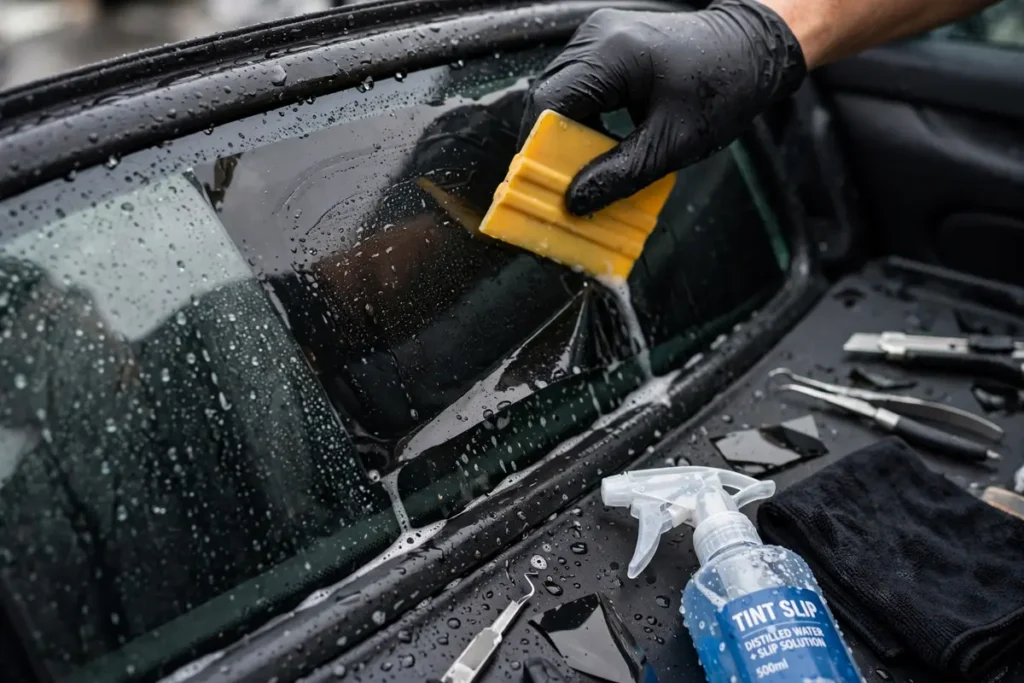
A window tinting service is a specialist business that applies a thin film to the inside of a car’s windows to darken the glass, reduce glare and block heat and ultraviolet light. The film is a polyester sheet, usually only a few microns thick, which is cut to the exact shape of each window, applied with a slip solution, and smoothed into place with a squeegee before being trimmed and heat-shrunk to fit the curve of the glass. A professional window tinting service will have a clean, dust-free workshop, because even a single speck of dust trapped under the film will show as a bubble or a speck in the finished tint.
Most window tinting services offer a choice of films at different darkness levels, measured as visible light transmission, or VLT, which is the percentage of visible light that passes through the glass. A 70% VLT film lets 70% of light through and is very light, while a 5% VLT film, often called limo black, lets almost no light through and is nearly opaque. A window tinting service near me should also offer different types of film, including dyed, metallic, carbon and ceramic films, each with different properties for heat rejection, signal interference and durability. A reputable fitter will explain these options, check the legal limits for your car, and give you a written quote before starting work.
What Are the UK Legal Limits for Window Tinting?
The UK legal limits for window tinting are set out on GOV.UK and come from the Road Vehicles (Construction and Use) Regulations 1986, and they depend on which window you are tinting and when your vehicle was first used. For vehicles first used on or after 1 April 1985, the front windscreen must let at least 75% of light through, and the front side windows, the ones beside the driver’s seat, must let at least 70% of light through. For vehicles first used before 1 April 1985, both the windscreen and the front side windows must let at least 70% of light through. There are no rules at all for tinting the rear windscreen or the rear passenger windows, so those can be as dark as you like.
It is important to understand that VLT is measured on the finished glass, not on the film alone. Most factory glass already lets through around 85% to 88% of light, so adding even a light film to a front side window can push it below the 70% minimum. This is why a professional window tinting service near me should test your glass with a light meter before and after fitting, and why you should be suspicious of any fitter who promises a dark tint on your front windows without checking. The rules apply in England, Wales and Scotland, and Northern Ireland has its own regulations with the same limits for most cars. The law is about safety: dark front glass reduces the driver’s vision at night and in bad weather, and it stops other road users from seeing the driver.
How Much Does Window Tinting Cost?
How much window tinting costs depends on the size of your car, the number of windows you want tinted, the type of film you choose, and where you live. A small hatchback with only the rear windows tinted will cost less than a large SUV or people carrier with every window done, and a premium ceramic film will cost more than a basic dyed film. Most fitters charge per window or offer a package price for the rear windows, and some offer a full-car package. Prices also vary by region, with London and the South East generally more expensive than other parts of the UK.
Because prices vary so much, the best approach is to get at least two or three written quotes from local fitters, and to make sure each quote covers the same work: the same windows, the same film type, and the same warranty. Be cautious of prices that seem too good to be true, because they often mean cheap film, a rushed job, or a fitter who is not insured. A reputable window tinting service will give you a clear written quote, explain what film they are using, and offer a warranty against bubbling, peeling and fading. The cheapest option is rarely the best value, because a poor tint will need to be removed and redone, which costs more in the long run.
What Types of Window Tint Film Are There?
There are four main types of window tint film, and the differences matter for heat rejection, durability and price. Dyed film is the cheapest and most common type, and it works by adding a layer of dye to the glass that absorbs light and reduces glare. It looks good when new, but it can fade over time and it does not block much heat. Metallic film contains tiny metal particles that reflect heat and light, and it is more durable than dyed film, but it can interfere with mobile phone, GPS and radio signals, which is a drawback in modern cars.
Carbon film is a step up from dyed film, because it contains carbon particles that block heat without using metal, so it does not interfere with electronic signals. It has a dark, matte appearance that many drivers prefer, and it is more resistant to fading than dyed film. Ceramic film is the premium option, and it uses ceramic particles to block a high proportion of infrared heat and ultraviolet light while remaining very clear. It is the most expensive type, but it offers the best heat rejection and the longest life, and it does not interfere with signals. A good window tinting service will explain these options and help you choose the right film for your budget and your needs.
How Do You Choose a Window Tinting Service Near You?
Choosing a window tinting service near me starts with a simple search, but the real work is in checking the fitter’s reputation and credentials. Look for a business with a proper workshop rather than a mobile fitter working in a car park, because dust and wind are the enemies of a clean tint job. Check online reviews on Google and Trustpilot, and look for photos of recent work, because a good fitter will be proud to show it. Ask whether the business is insured, whether the film comes with a manufacturer’s warranty, and whether the fitter offers a warranty on their workmanship.
It is also worth asking the fitter directly about the legal limits, because their answer will tell you a lot about their professionalism. A reputable window tinting service will explain the 75% windscreen and 70% front side window limits without being asked, and will test your glass with a light meter before fitting anything to the front windows. If a fitter offers to tint your front windows dark, or tells you not to worry about the law, walk away, because you will be the one who pays the fine and fails the MOT. Ask for a written quote, ask how long the job will take, and ask what happens if the tint bubbles or peels. A good fitter will answer all of these questions clearly and without hesitation.
What Happens During a Window Tinting Appointment?
A window tinting appointment usually takes between two and four hours, depending on how many windows are being tinted and how complex the job is. The fitter will start by cleaning the inside of each window thoroughly, because any dirt or grease left on the glass will show through the film. They will then cut the film to the exact shape of each window, either by hand or with a computer cutting system, and apply it using a slip solution that lets them position the film precisely before it sticks. The film is then smoothed into place with a squeegee to push out water and air bubbles, and heat is applied to shrink the film to the curve of the glass.
After the film is fitted, the fitter should check the finished job with you, showing you each window and explaining how to look after the tint while it cures. The tint will look slightly hazy for the first few days, and this is normal: the remaining moisture needs time to evaporate, and the film will clear as it dries. You should not roll the windows down for at least two to three days, and you should not clean the inside of the windows for at least a week. A professional window tinting service will give you written aftercare instructions and a warranty, and they will invite you to come back if you notice any bubbling or peeling.
How Do You Look After New Window Tint?
Looking after new window tint is simple, but the first week matters most. For the first two to three days, do not roll the windows down, because the film is still bonding to the glass and the seal at the edge can lift if the window moves. Do not clean the inside of the windows for at least a week, and when you do clean them, use a soft microfibre cloth and a mild, ammonia-free glass cleaner, because ammonia can damage the film and cause it to bubble or discolour. Never use abrasive pads, scrapers or harsh chemicals on tinted glass.
Small water bubbles under the film are normal in the first few days and will usually disappear as the film cures, but large bubbles, creases or peeling edges are not normal and should be reported to the fitter straight away. Most reputable fitters offer a warranty of at least a year, and many offer a lifetime warranty against bubbling, peeling and fading, so keep your receipt and warranty paperwork safe. With proper care, a good quality tint should last for many years, and ceramic films in particular are designed to resist fading and discolouration over time.
What Happens If Your Window Tint Is Illegal?
If your window tint is illegal, the consequences can be serious. The police and Driver and Vehicle Standards Agency (DVSA) examiners use light measuring equipment to test window tint at the roadside, and if your windscreen or front side windows let through less light than the legal minimum, you can be given a prohibition notice that stops you using the vehicle on the road until the extra tint is removed. You can also be given a penalty notice or a court summons, and in serious cases you can receive points on your licence. Your insurance may also be invalidated, because an illegal modification can be treated as a failure to disclose a change to the vehicle.
Your car can also fail its MOT if the front windows are too dark. The MOT tester will check the windscreen and front side windows, and if the windscreen lets through less than 75% of light or the front side windows less than 70%, the car will receive a major fault and fail until the tint is removed. The rear windows are not tested for tint, because there is no legal limit for them. The safest approach is to have your tint checked by a professional before your MOT is due, and to keep the paperwork from your fitter showing the film’s VLT rating, so you can prove the tint is legal if you are ever stopped.
Conclusion
A window tinting service near me can transform your car, making it cooler, more private and more comfortable to drive, but the job is only worth doing if it is done legally and professionally. The UK rules are clear: the front windscreen must let at least 75% of light through on modern cars, the front side windows at least 70%, and the rear windows have no limit at all. A reputable fitter will know these limits, test your glass, and refuse to fit an illegal tint, and that is exactly the fitter you should choose.
The best approach is to research local fitters, read their reviews, ask about their film and their warranty, and get a written quote before you commit. Choose the right film for your budget, whether that is a basic dyed film or a premium ceramic one, and follow the aftercare instructions carefully in the first week. Done properly, window tinting is a modification that improves your car every day, and done legally, it is one you will never have to worry about at a roadside check or an MOT.
How Much Light Must a Car Windscreen Let Through in the UK?
In the UK, the front windscreen of a car first used on or after 1 April 1985 must let at least 75% of light through, according to GOV.UK. For cars first used before 1 April 1985, the minimum is 70%. This is measured as visible light transmission, or VLT, and it applies to the finished glass including any film. Most factory glass already lets through around 85% to 88% of light, so only a very light film can legally be added to a modern windscreen.
Is It Legal to Tint Front Side Windows in the UK?
Yes, it is legal to tint front side windows in the UK, but they must let at least 70% of light through, regardless of when the car was first used. This is the rule set out on GOV.UK under the Road Vehicles (Construction and Use) Regulations 1986. Because most factory glass already lets through around 85% of light, only a very light film can be added to the front side windows without breaking the law, and a professional fitter should test the glass with a light meter first.
Can You Tint Rear Windows as Dark as You Like?
Yes, there is no legal limit on how dark you can tint the rear windscreen or the rear passenger windows in the UK. GOV.UK states that there are no rules for tinting these windows, so you can fit any shade, including 5% limo black, and remain legal. The only condition is that you must have working rear-view mirrors on both sides of the car, because the rear windscreen tint will reduce visibility through it. The MOT does not test rear window tint.
How Long Does Window Tinting Take?
Window tinting usually takes between two and four hours, depending on how many windows are being tinted and how complex the job is. A rear-windows-only job on a small car can be done in around two hours, while a full-car tint on a large SUV can take four hours or more. The film then needs a few days to cure fully, during which time you should not roll the windows down and the tint may look slightly hazy. A professional fitter will give you written aftercare instructions.
What Happens If My Window Tint Fails the MOT?
If your window tint fails the MOT, it is because the windscreen lets through less than 75% of light or the front side windows less than 70%, and the tester will record this as a major fault. Your car will fail the MOT until the illegal tint is removed from the front windows, after which it can be retested. The rear windows are not tested for tint, because there is no legal limit for them. To avoid this, have your tint checked by a professional before your MOT is due.